A friendly, step-by-step guide to raw edge appliqué: stabilizers, presser feet, needles, threads, and tension adjustments for smooth stitches and flat quilts.
The Quilt Mark
October 22, 2026
Thread Weight for Quilting
Thread weight doesn’t have to be mysterious. Learn what 40 wt, 50 wt, and 60 wt really mean, how fibers behave, and how to choose thread for crisp piecing and beautiful quilting.

Clara Jenkins
Clara Jenkins is an avid quilter and fabric enthusiast who has been designing and piecing together quilts for over twenty years. She shares her passion for color coordination, block design, and practical sewing techniques to help makers of all skill levels create beautiful, lasting heirlooms. Through Quiltmark, Clara aims to make the timeless art of quilting accessible, joyful, and deeply rewarding for everyone.
Updated October 22, 2026
Thread is one of those supplies we all think we understand until we’re standing in front of a wall of spools that all look the same and somehow cost wildly different amounts. I have absolutely been that quilter, squinting at tiny labels and wondering why my “perfect” piecing thread suddenly made my seams bulky, or why my topstitching vanished the moment I finished a quilt.
Here is the comforting truth: you do not need thirty types of thread to make a beautiful quilt. You just need to understand what thread weight means, how fiber affects behavior, and how to match your spool to the job in front of you.
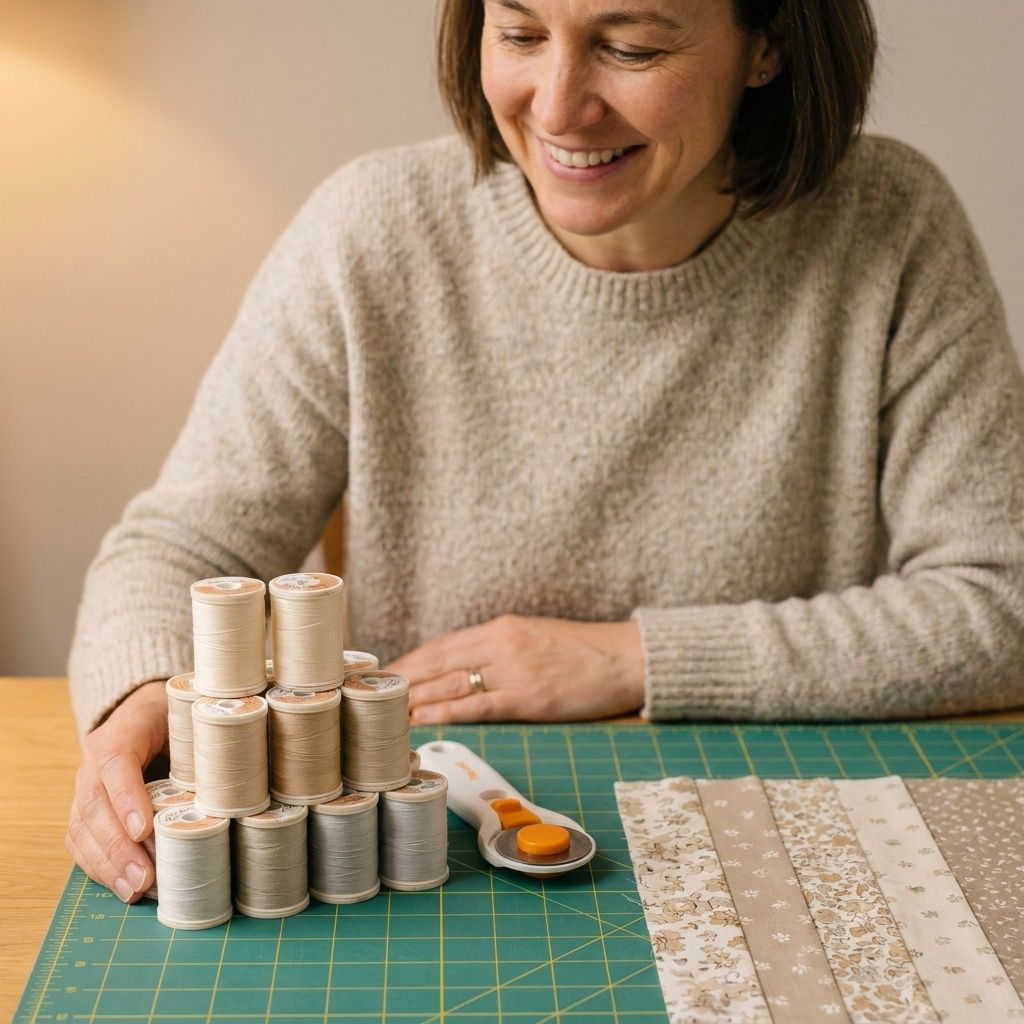
What thread weight means
You will often see “wt” on thread labels. That simply means weight, a sizing system that gives you a general sense of how thick (or fine) a thread is.
The part that trips people up is this:
- In the common quilting weight system (40 wt, 50 wt, 60 wt), a higher number means a finer thread.
- A lower number means a thicker thread.
So 40 wt is thicker than 50 wt, and 50 wt is thicker than 60 wt.
One helpful caveat: weight is not perfectly standardized across brands, and a “40 wt” from one company may not behave exactly like another. When you can, compare weights within a brand, and always test if you are switching brands or fibers.
If you remember only one thing, make it this: piecing usually likes finer thread, quilting and topstitching often like a slightly thicker thread, especially if you want to see your stitches.
Three weights most quilters use
50 wt: the everyday hero
If I could keep only one weight in my sewing room, it would be 50 wt. It is fine enough to sink into seams without creating bulk, but still strong and pleasant to sew with.
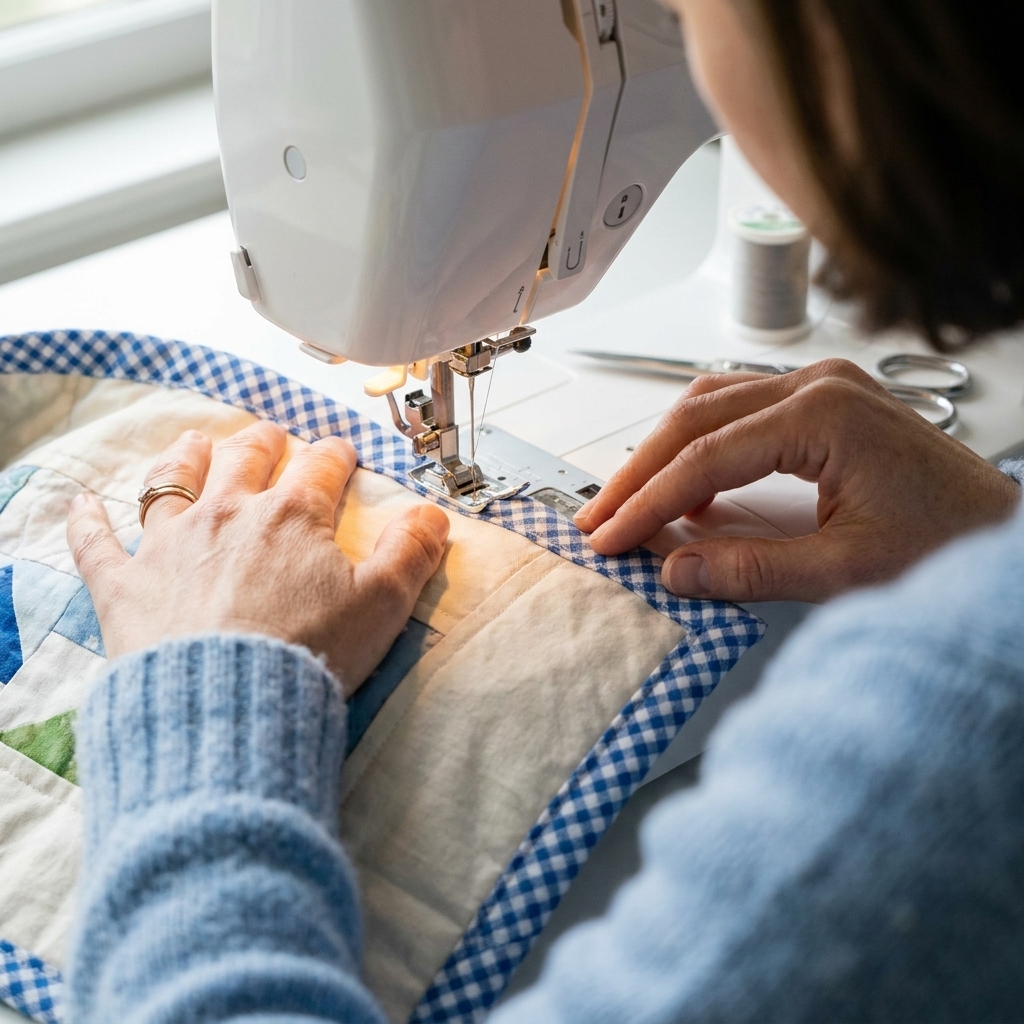
- Best for: machine piecing, patchwork construction, attaching binding (machine), general sewing
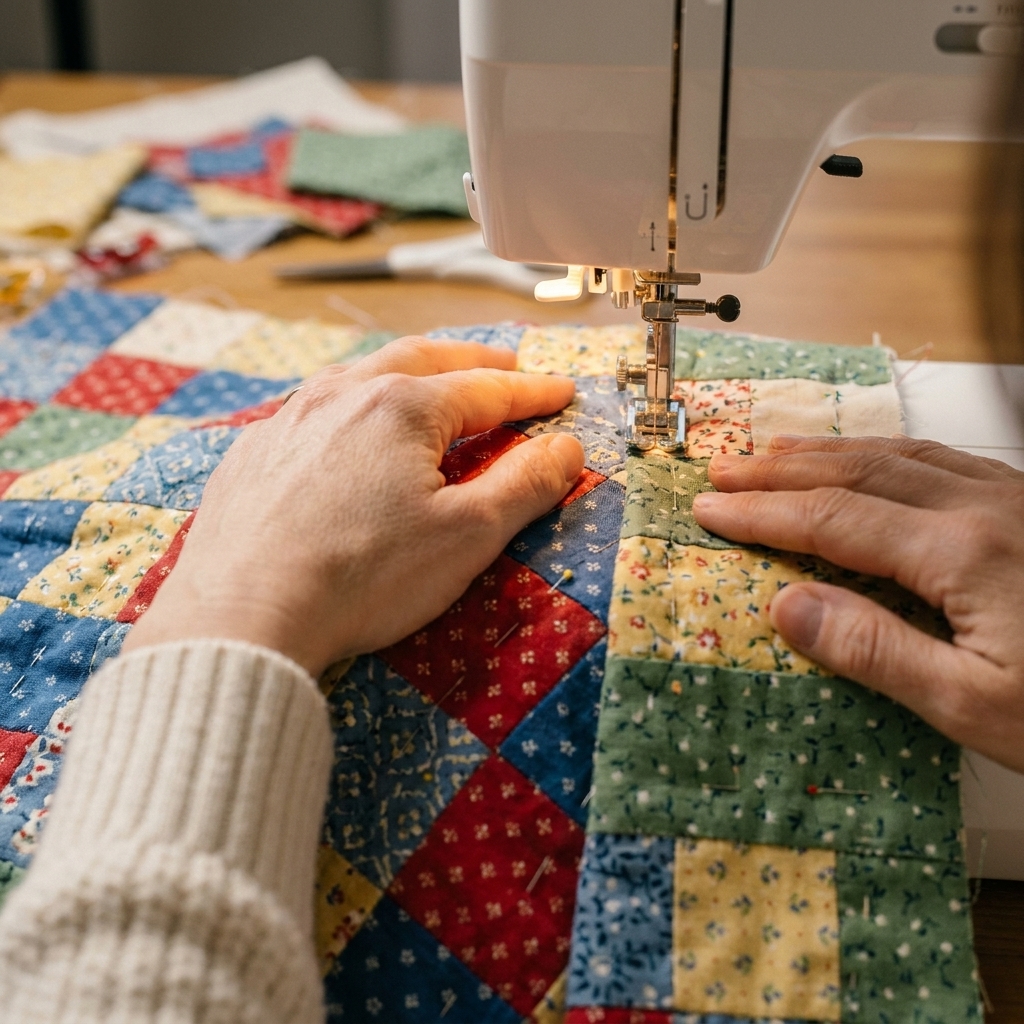
- Why it works: it makes flatter seams, helps points meet cleanly, and behaves well at a standard 1/4-inch seam allowance
40 wt: defined quilting stitches
40 wt is a little thicker, which means your quilting lines can look more defined without jumping all the way to a statement topstitch thread. It is a sweet spot for many machine quilters.
- Best for: walking foot quilting, free-motion quilting, decorative topstitching on quilt tops
- Why it works: it gives you visible stitches with a smooth, not-too-ropey look
60 wt: fine and subtle
When you are sewing very small pieces or chasing the flattest seam possible, 60 wt can feel like magic. It is also a favorite for subtle quilting where you want texture more than a bold thread line.
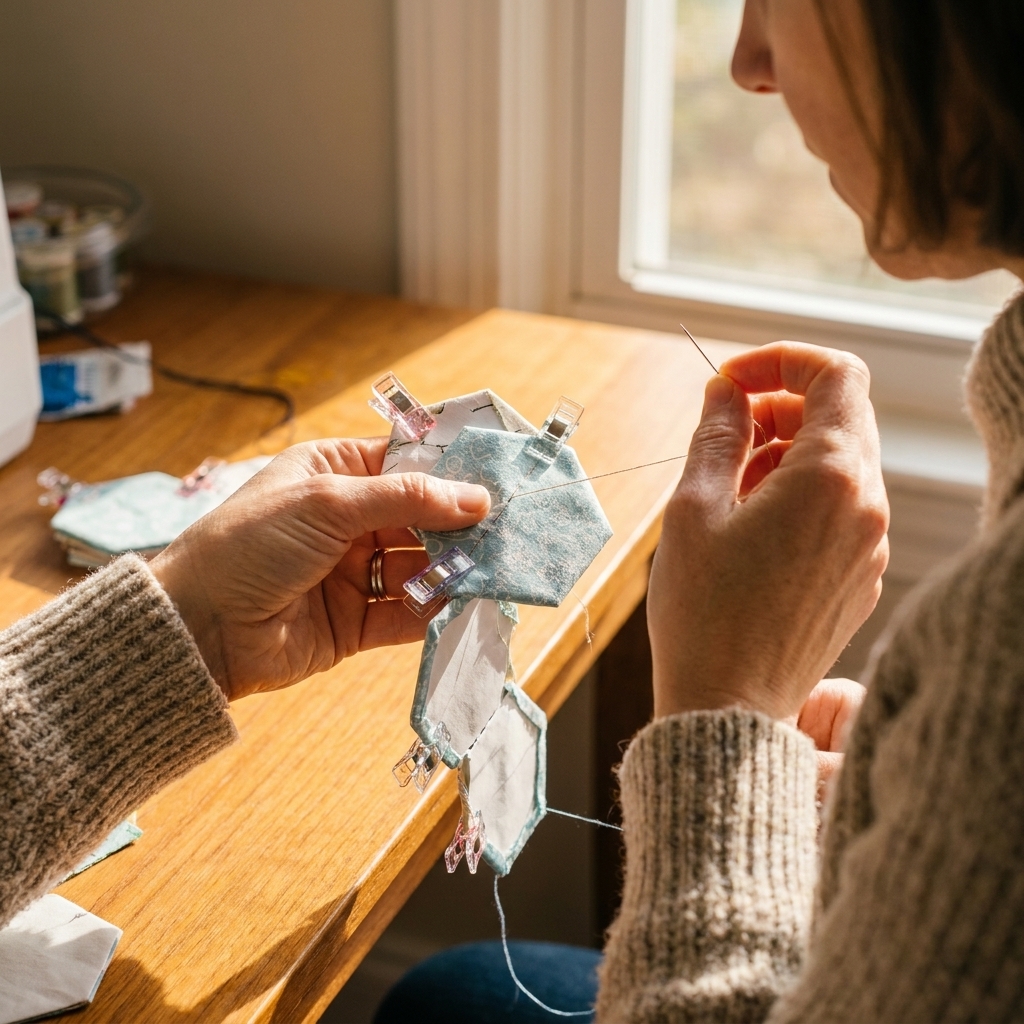
- Best for: precision piecing (tiny units), paper piecing, subtle quilting on busy prints
- Watch for: because it is finer, it can be easier to snap if tension is off or the needle is too small
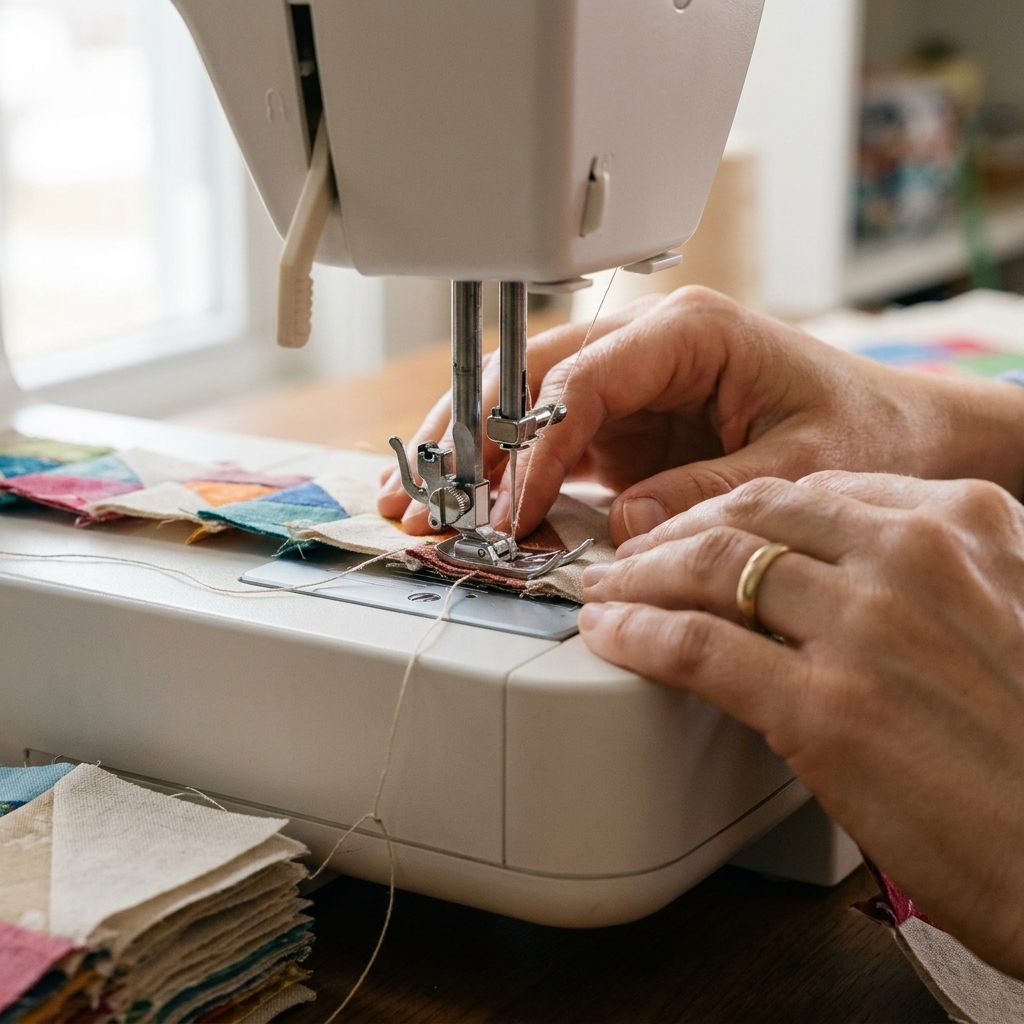
Fiber matters too
Weight is only half the story. Fiber changes how thread behaves under the needle and how it holds up through washing and use.
Cotton thread
Cotton is the classic quilting choice. It has a slightly matte finish and a gentle grip that helps seams stay put. It also tends to blend beautifully into cotton quilt fabric.
- Pros: traditional look, presses nicely, blends into cotton fabric, great stitch definition for quilting texture
- Cons: can create more lint than polyester, may be slightly less abrasion-resistant than poly in high-stress areas
Polyester thread
Modern polyester thread is strong, smooth, and typically lower lint than cotton, especially in higher-quality brands. If you are quilting something that will be washed constantly (think baby quilts or picnic quilts), polyester can be a very practical choice.
- Pros: strong, consistent, often low lint, great for high-speed stitching
- Cons: sheen can be a touch more noticeable, and it does not always melt in visually on a very matte cotton quilt top
Cotton-wrapped polyester and blends
These aim for a cotton look with extra strength, often with a polyester core. They can be a nice compromise when you want durability but still love a softer, traditional finish. As always, test your exact combo if you press with a hot iron, and if you use a cotton-wrapped core thread for dense quilting, keep an eye on how it behaves in your machine.
A quick note on sizing systems
While quilting shops often use “wt,” some online listings use other sizing like Tex or denier. If the numbers feel like they are speaking a different language, you are not imagining it. Use the manufacturer’s conversion chart when possible, and lean on testing rather than assuming two numbers are equivalent.
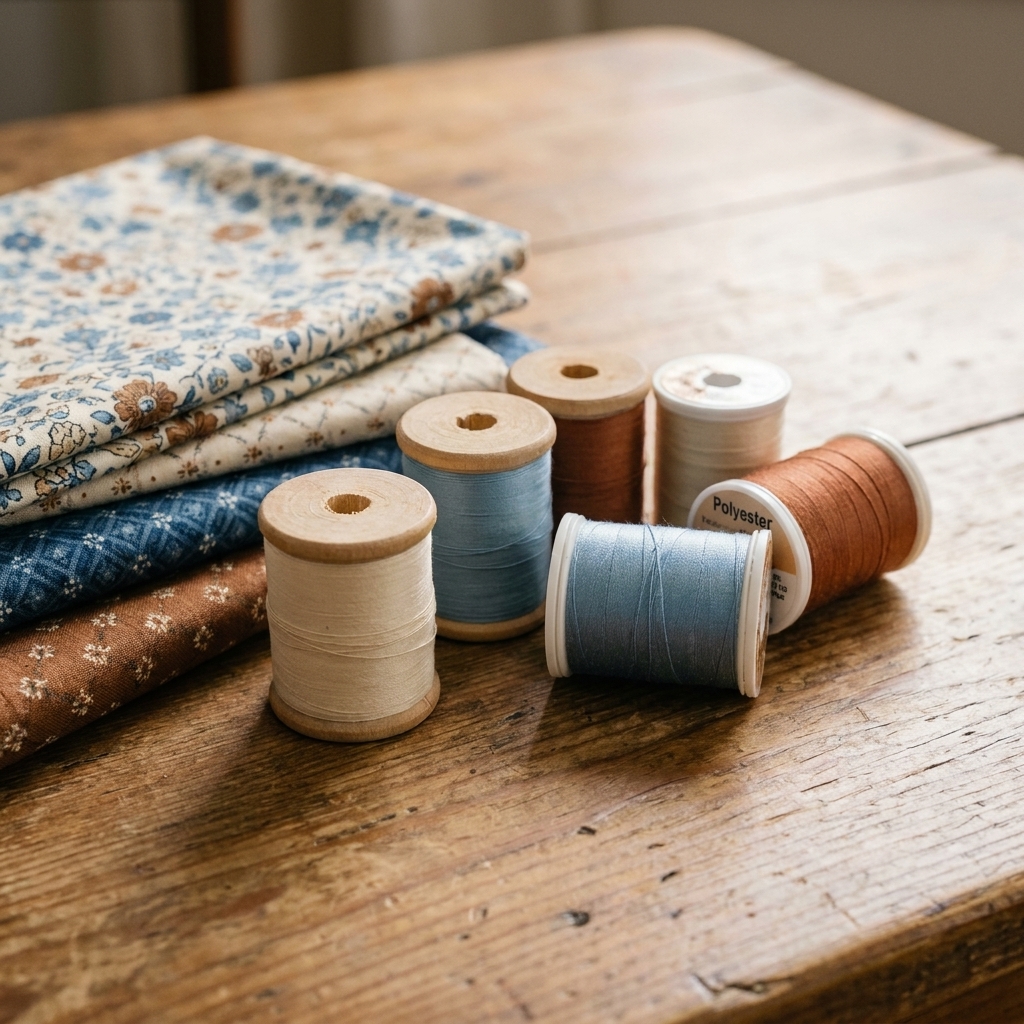
My go-to picks
For flat, strong piecing
For most quilts, I recommend:
- Thread: 50 wt cotton (or a high-quality 50 wt polyester if you prefer)
- Color: a soft neutral that blends with most fabrics, or a medium gray which is surprisingly forgiving
- Needle pairing: start with a fresh 80/12 or 75/11 in a quilting or Microtex needle, and adjust if your machine prefers something different
If your seams feel bulky, your points are not matching, or your pressed seams look like little ridges, moving from 40 wt to 50 wt (or from 50 wt to 60 wt) can make a noticeable difference.
For machine quilting
This is where your preference matters most. Ask yourself: do you want the quilting to whisper or to sing?
- Subtle texture: 50 wt or 60 wt, especially on busy prints
- Visible quilting lines: 40 wt is my everyday choice
- Bold topstitch look: a thicker specialty thread can be gorgeous, but it needs needle and tension adjustments and more testing
For a beginner-friendly setup, you can quilt an entire quilt with the same 50 wt you pieced with. It is not lesser. It is simply a clean, classic finish.
Thread quality matters
If you have ever had one spool that sews like butter and another that fuzzes, shreds, or snaps, you already know this. Higher-quality thread tends to have more consistent thickness, fewer slubs, and smoother winding. That consistency matters when you are stitching long seams or quilting for hours, because your machine loves predictable thread.
If you are troubleshooting constant breakage, skipped stitches, or tension drama, it is worth trying a better-quality spool before you tear your machine apart.
Needles and tension
Thread weight issues often show up as tension issues. Before you blame your machine, do a quick match-up check, and treat needle recommendations as starting points, not rules.
Easy starting points
- 50 wt: try 80/12 (or 75/11 for very fine fabrics or precise piecing). Quilting or Microtex needles both work well depending on your fabric.
- 40 wt: try 80/12 to 90/14. If you see shredding or hear a “thunk” as the needle punches through, a larger needle or a topstitch needle can help.
- 60 wt: try 70/10 to 75/11, often in Microtex for crisp piercing, and adjust based on fabric, batting, and quilting density.
And yes, I am going to say the unglamorous thing: change your needle more often than you think. A slightly burred or dulled needle can shred thread and make perfectly good spools look bad.
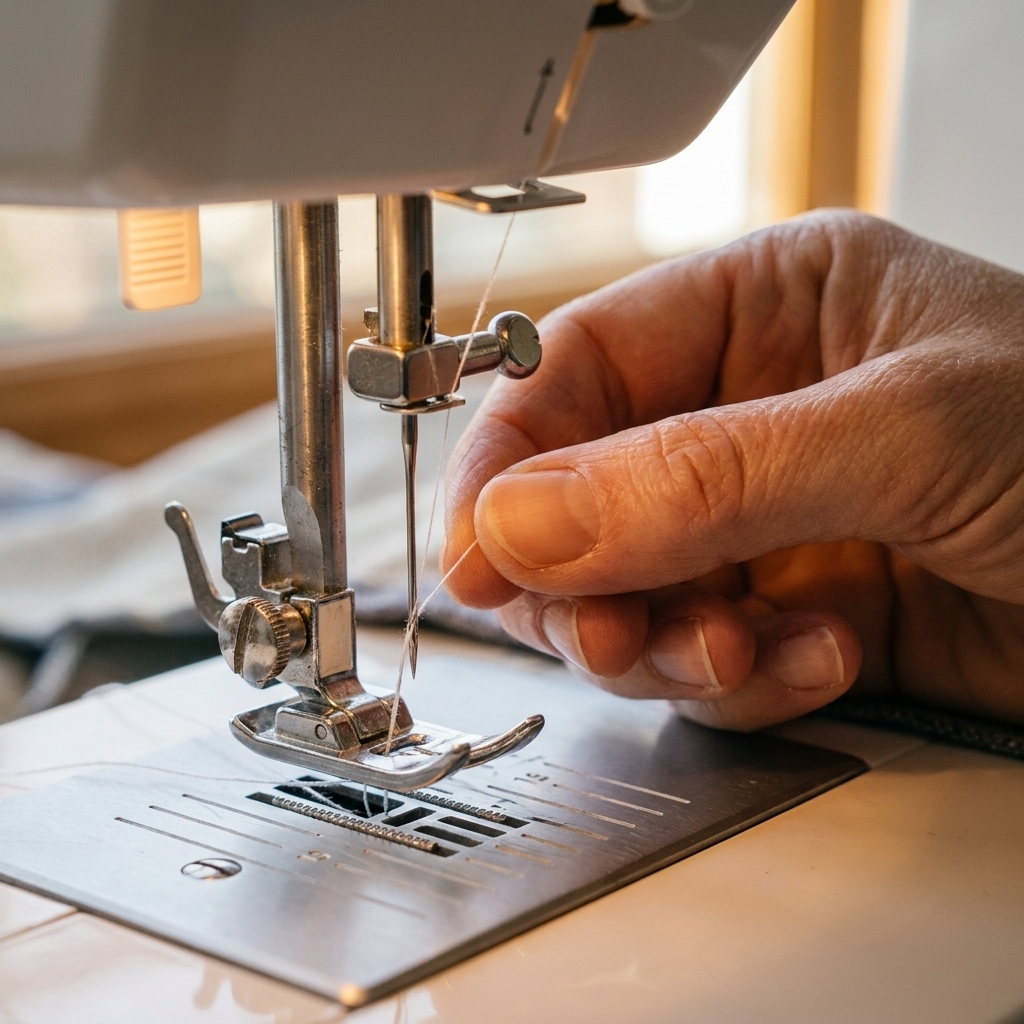
Bobbin thread
You can absolutely use the same thread in the top and bobbin for both piecing and quilting, especially when you are starting out. That said, many quilters like a slightly finer thread in the bobbin for smoother quilting and fewer tension headaches.
- Simple approach: same thread top and bobbin (50 wt for piecing, 40 wt or 50 wt for quilting)
- Smoother quilting approach: 40 wt on top, 50 wt or 60 wt in the bobbin
If you change bobbin thread weight, do a quick test sandwich first. Look for balanced stitches with no dots of bobbin thread pulling to the top and no top thread tugging to the back.
Choosing thread color
Color is where many of us spiral. My gentle rule: match the value, not the exact color. Value means how light or dark the thread reads from a few feet away.
- For piecing: pick a neutral that blends with most of the fabrics in your quilt top. Off-white, warm beige, or medium gray are workhorses.
- For quilting: decide whether you want your quilting to blend (similar value) or stand out (contrast).
- Variegated thread: can be gorgeous for quilting texture, but test first on your exact fabric. Some variegations read stripey on solids.
When in doubt, medium gray is my quiet secret weapon. It disappears into more quilts than you would expect.
Specialty threads
You do not need these to make wonderful quilts, but they can be fun when the project calls for a little extra shine or drama.
- Trilobal polyester: high sheen and beautiful stitch definition for quilting designs that you want to highlight.
- Rayon: lovely sheen for decorative stitching, but it can prefer slower speeds and a needle that plays nicely with it.
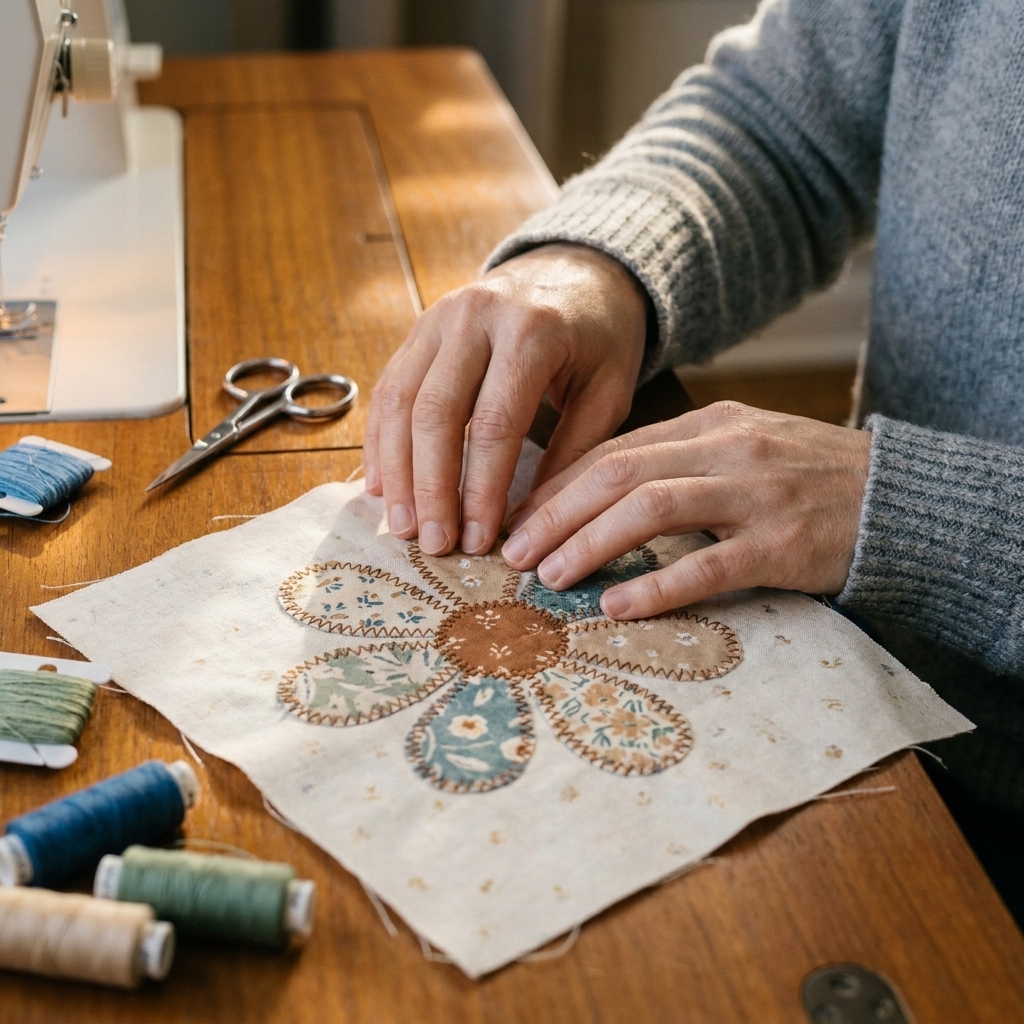
- Monofilament: great for invisible appliqué or stitching in the ditch, but it can be fussy. Test first, and avoid very hot pressing.
- Metallic: stunning, and also the thread most likely to make you practice patience. Use a metallic needle or topstitch needle, sew slower, and test tension.
Common thread problems
Thread keeps breaking
- Change the needle.
- Rethread the machine completely with the presser foot up.
- Check that the spool is unwinding smoothly and not catching on the cap.
- Try one needle size up if you are using a thicker thread (like 40 wt).
Seams feel bulky
- Move to a finer thread (50 wt instead of 40 wt, or 60 wt for tiny piecing).
- Press, do not slide. Lift and set the iron instead of pushing seams around and stretching your pieces.
- Consider a slightly shorter stitch length for piecing (around 2.0 to 2.2) to keep seams secure without adding thread build-up.
Loops on the back when quilting
- This is often a top threading or tension issue. Rethread first.
- Make sure you are quilting with the presser foot down and the correct foot engaged.
- Try a bobbin with fresh, evenly wound thread.
Lint build-up and skipped stitches
If you sew with cotton thread, lint is normal. If lint collects in the bobbin area, it can contribute to tension weirdness and skipped stitches. A quick cleaning routine helps more than you would think.
A simple thread set
If you want a tidy, confidence-building starter set, this is what I recommend stocking:
- 50 wt cotton in a light neutral (for piecing)
- 50 wt cotton in medium gray (for piecing and blending quilting)
- 40 wt cotton in a favorite color family (for visible quilting)
- 60 wt in neutral (optional, for tiny piecing or subtle quilting)
From there, let your thread collection grow as your projects ask for it, not because the spool wall made you feel like you should.
FAQ
Is 40 wt or 50 wt better for piecing?
For most patchwork, 50 wt is the better default because it makes flatter seams. 40 wt can work, but it may add a bit more bulk, especially where multiple seams meet.
Can I piece and quilt with the same thread?
Yes. A good-quality 50 wt thread can piece and quilt a whole quilt beautifully. If you want more visible quilting lines, switch to 40 wt for quilting.
Does thread weight affect seam accuracy?
It can. Thicker thread takes up slightly more space in the seam, which can nudge tiny units off just enough to be annoying. If you love precision piecing, a finer thread (50 wt or 60 wt) helps.
Should I use cotton or polyester for quilts washed a lot?
Either can work well if it is quality thread. Polyester is very strong and often lower lint, so it is a practical option for heavy-use quilts. Cotton gives a classic look and feel and is still perfectly durable for everyday quilts.
One last reminder
Thread choices are not a moral failing. If you made a quilt with the wrong spool and it is still warm, sturdy, and loved, then you chose perfectly.
But if you want the easiest road: 50 wt for piecing, 40 wt for quilting when you want to see your stitches, and a quick test sandwich before you commit to the whole quilt. That combination has carried me through decades of quilts, from my earliest wonky baby quilt to the heirlooms I am still stitching today.