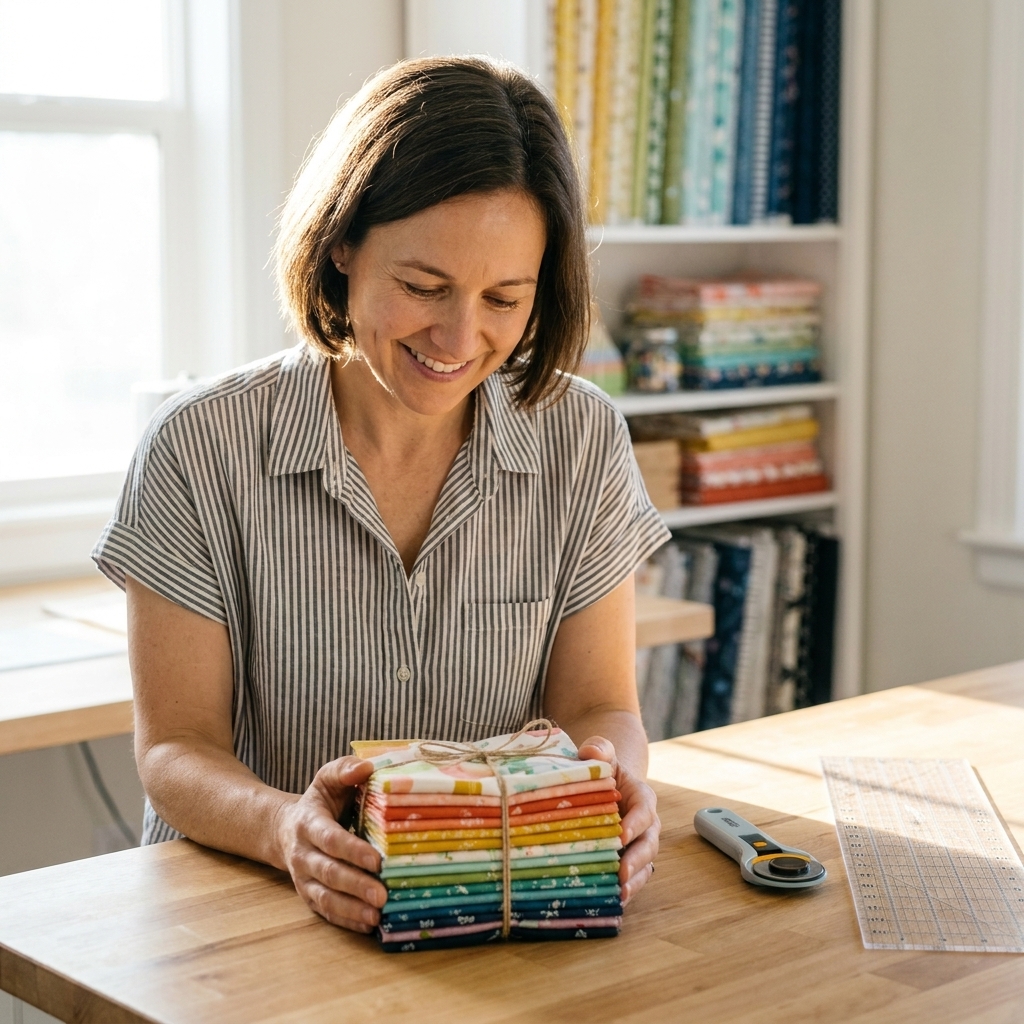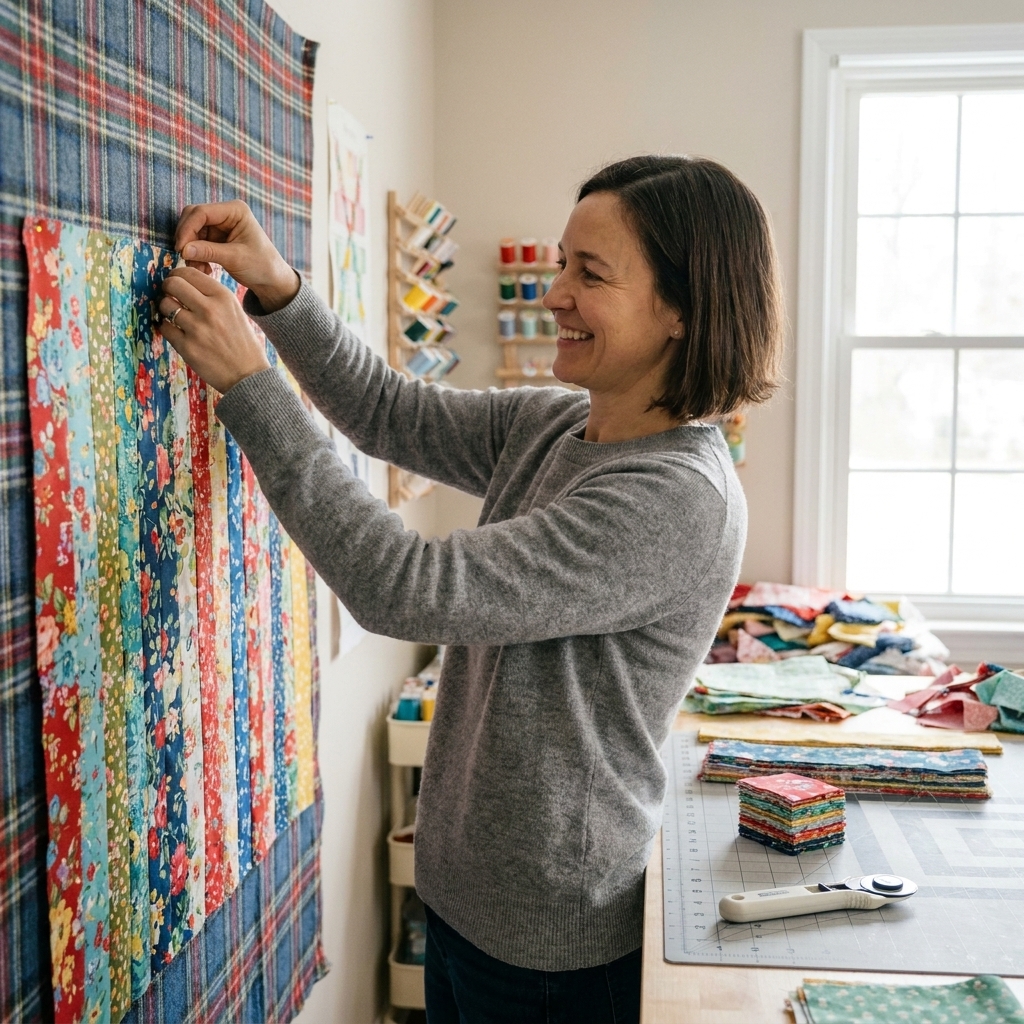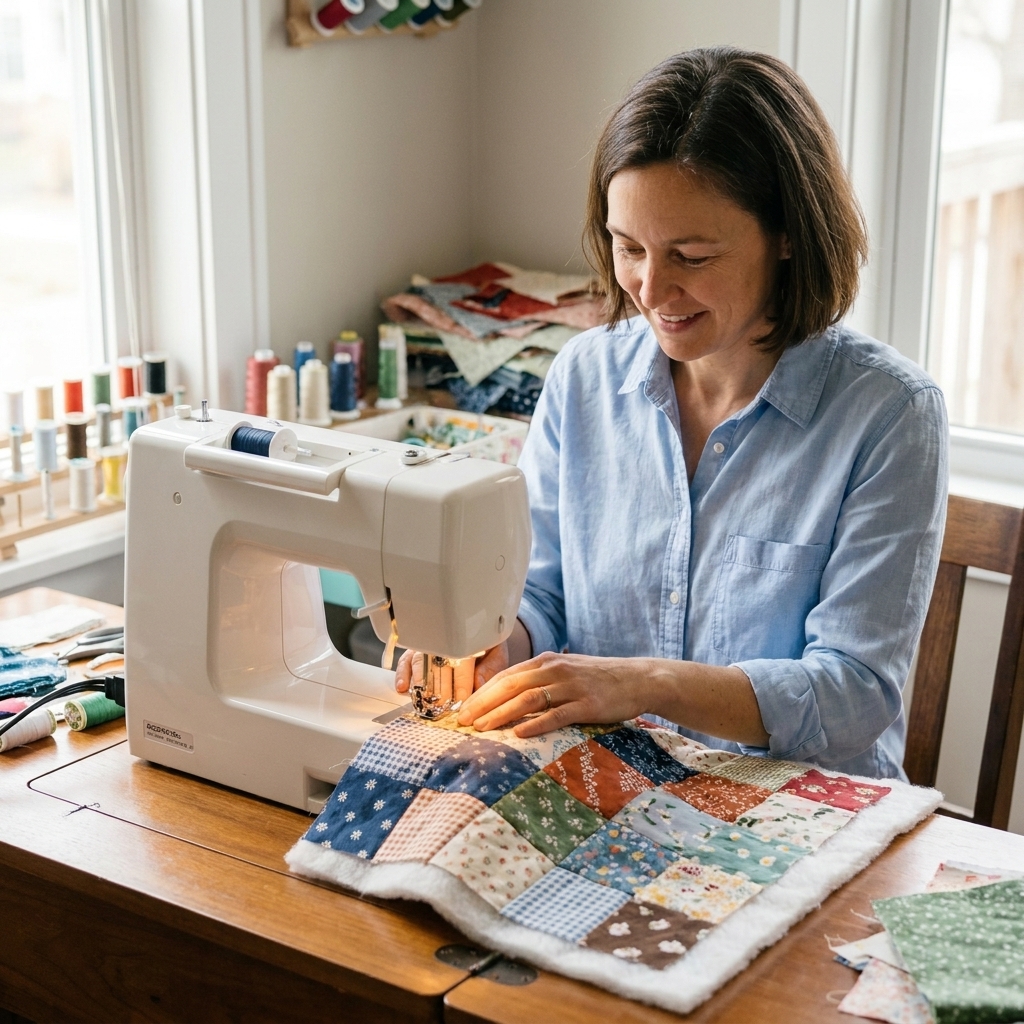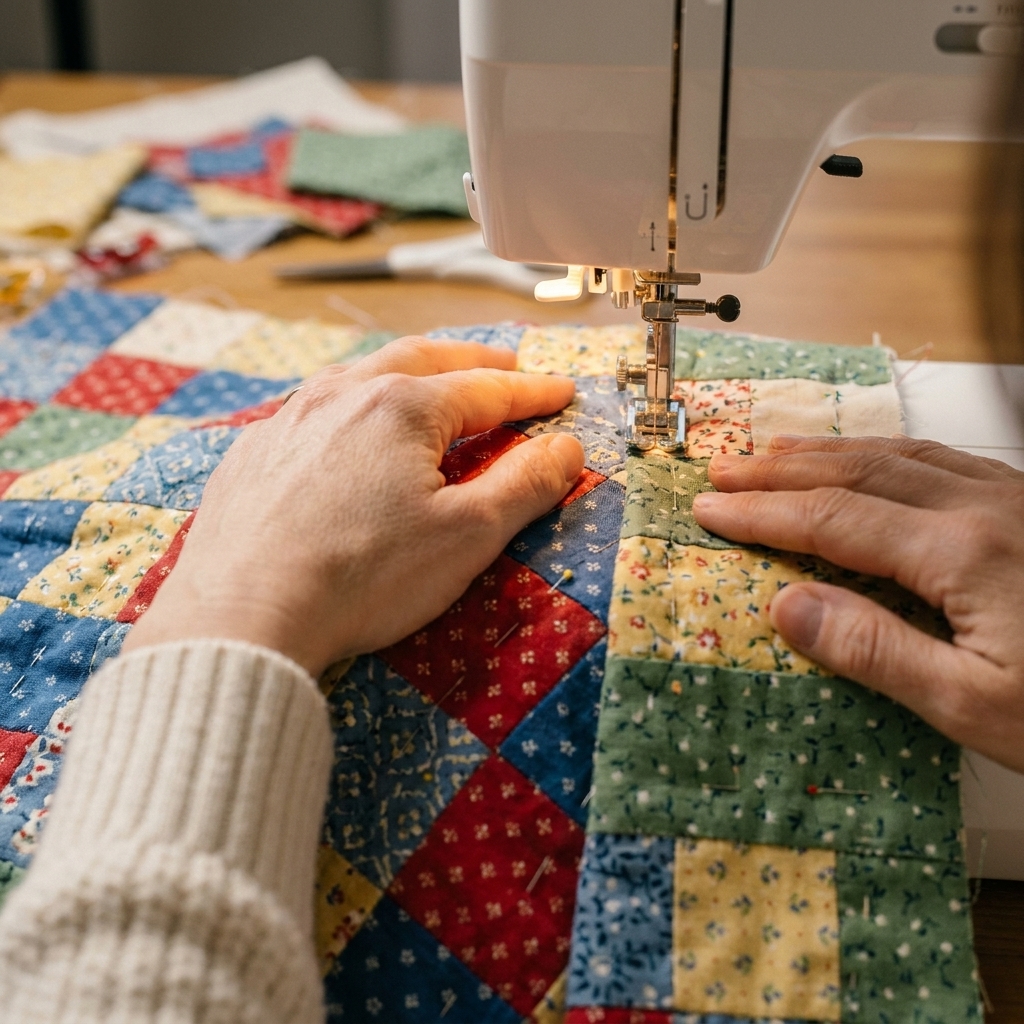
A complete beginner walkthrough for a simple patchwork quilt: choose fabrics, cut squares, piece rows, quilt the layers, and bind a cozy finished quilt.
The Quilt Mark
October 22, 2026
Modern Baby Quilt Patterns
Plan and sew a modern baby quilt with confidence: standard sizes, yardage assumptions, backing and binding guidance, baby-friendly materials, and fresh design ideas.

Clara Jenkins
Clara Jenkins is an avid quilter and fabric enthusiast who has been designing and piecing together quilts for over twenty years. She shares her passion for color coordination, block design, and practical sewing techniques to help makers of all skill levels create beautiful, lasting heirlooms. Through Quiltmark, Clara aims to make the timeless art of quilting accessible, joyful, and deeply rewarding for everyone.
Updated October 22, 2026
Modern baby quilts are my favorite kind of project: small enough that they can be finished in a weekend, big enough to play with color, and useful in a way that makes every stitch feel like a love letter. If you have ever stared at a pattern and thought, “Is this the right size for an actual baby?” or “How much fabric do I really need?”, you are in the right place.
Below you will find reliable sizing guidelines, a yardage cheat sheet with clear assumptions, and design ideas that feel fresh without being fussy. We are going for cozy, washable, and beautifully modern.
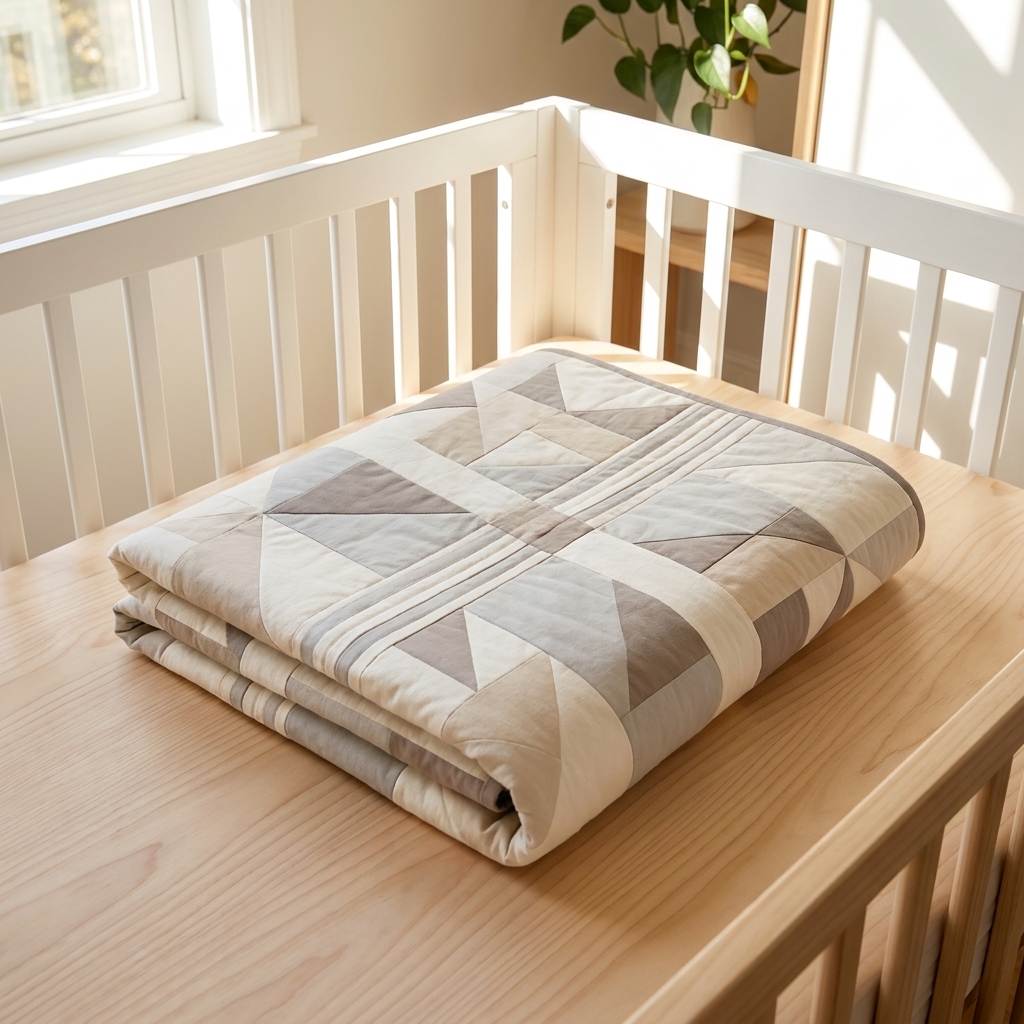
Standard baby quilt sizes
There is no single official baby quilt size, but there are sizes that consistently work for real life: tummy time, stroller rides, daycare naps, and later on, couch forts. Here are the dimensions I reach for most often.
| Quilt type | Finished size (inches) | Best for |
|---|---|---|
| Mini baby quilt | 30 x 36 | Stroller, car seat (not under straps), quick gifting |
| Crib quilt | 36 x 48 | Tummy time, nursery floor, toddler snuggles |
| Large baby quilt | 40 x 55 | Grows with baby, daycare nap mat, couch blanket later |
| Toddler throw | 45 x 60 | Big kid longevity, reading nook, travel blanket |
Crib safety note
In many safe-sleep guidelines, loose blankets are not recommended for infants in a crib. That does not make baby quilts any less meaningful. It simply shifts how they are used: supervised tummy time, snuggles while awake, stroller walks, floor play, and later toddler years. When in doubt, gift it with a note like: “Perfect for playtime and cuddles while baby is awake.”
If you want a source to share with a gift recipient, the American Academy of Pediatrics (AAP) safe-sleep guidance is a solid place to start.
Fabric requirements
Modern quilts often look complex, but the fabric planning can be refreshingly simple if you build it around three buckets:
- Quilt top: prints and solids for the design
- Backing: one wide piece (108 inch wideback) or a pieced back
- Binding: the frame that finishes everything
Assumptions for the chart below: standard 42 to 44 inch wide quilting cotton; backing and batting cut 4 inches larger than the quilt top on all sides (8 inches bigger in both width and length); backing yardage is calculated for a pieced backing using 42 to 44 inch width-of-fabric (WOF). If you want a one-piece backing, use 108 inch wideback instead.
| Finished quilt size | Backing cut size | Backing yardage (pieced, 42 to 44 inch WOF) | Binding yardage | Batting size to buy |
|---|---|---|---|---|
| 30 x 36 | 38 x 44 | 1 1/4 yd (minimum) | 1/2 yd | 38 x 44 (or crib size, trimmed down) |
| 36 x 48 | 44 x 56 | 1 3/4 yd | 1/2 yd | 44 x 56 |
| 40 x 55 | 48 x 63 | 2 1/4 yd | 5/8 yd | 48 x 63 |
| 45 x 60 | 53 x 68 | 2 1/2 yd | 5/8 yd | 53 x 68 |
A quick reality check: “Minimum” yardage assumes you can use close to the full WOF after squaring and trimming. If you are working with a directional print, want extra wiggle room, or just prefer less stress, add another 1/8 to 1/4 yard.
Backing piecing
If your backing cut size is wider than your fabric WOF (most are), piecing is normal and easy.
- Step 1: Cut two lengths of backing fabric a little longer than the needed backing length.
- Step 2: Trim off the selvedges.
- Step 3: Sew the two panels together along the long edge with a 1/2 inch seam allowance.
- Step 4: Press the seam open, then square up the backing to the backing cut size.
For baby quilts, I usually put the seam slightly off center so it is less noticeable (and so the quilt back looks intentional, not like I ran out of fabric).
Binding assumptions
Binding yardage above assumes 2 1/2 inch wide straight-grain strips for double-fold binding, with about 40 inches of usable WOF per strip after trimming. If you cut 2 1/4 inch strips or use bias binding, your yardage may shift slightly.
How much fabric for the quilt top?
This depends on the pattern, but here are realistic planning ranges for modern designs:
- Simple patchwork (squares, bricks, large blocks): 1 1/2 to 2 1/2 yards total across several fabrics, plus background if you use one
- High-background modern (lots of negative space): 1 1/2 to 2 1/2 yards background, plus 1/2 to 1 1/2 yards for accents
- Scrappy stash-buster: 1 1/2 to 2 yards background (optional) plus scraps for the rest
If you want the easiest possible math, plan your baby quilt as a throw of big pieces. Larger shapes mean fewer seams, fewer points to match, and a very modern look.
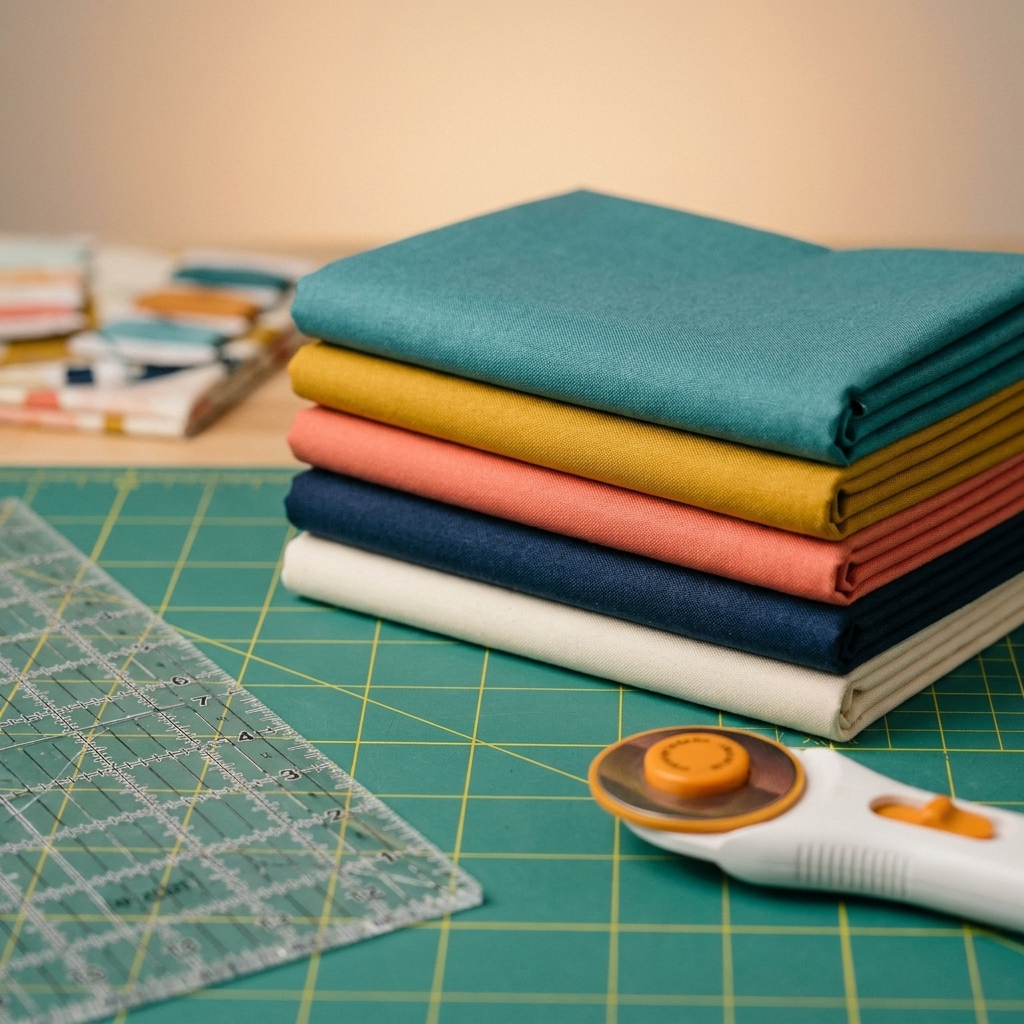
Baby-friendly materials
Babies are adorable, yes, but they are also sticky, leaky, and mysteriously talented at generating stains. Choose materials that can handle frequent washing without losing their charm.
Best fabrics
- 100% quilting cotton: My top pick for beginners. It presses crisply, pieces accurately, and washes well.
- Cotton sateen: Slight sheen and a softer hand. It can be a bit more slippery to piece, but it is lovely for modern solids.
- Double gauze (as a backing only): Dreamy soft. Use extra basting and expect a little more shifting.
- Wideback cotton (108 inch): Great for skipping the pieced back. Check fiber content and prewash if you are sensitive to shrinkage.
Use thoughtfully
- Loose weaves: If it frays aggressively when you press, it may not enjoy heavy washing.
- Heavy embellishments: Buttons, charms, and bulky trims are not ideal for baby quilts that will be handled and washed often.
- Glitter prints and metallics: They can be scratchy and may crack over time. Some are fine, but run your hand over the fabric and trust what it tells you.
Prewash or not?
This is personal, and quilters have opinions. For baby quilts, I lean toward prewashing saturated solids and deep reds to reduce the risk of bleeding. If you do not prewash, toss 2 to 3 color catchers in the first wash, use a gentle detergent, and consider a cool first wash if bleeding is a concern.
Batting
- Cotton batting: Breathable, classic drape. Can shrink slightly for that crinkly look.
- Cotton blend (80/20): A bit more resilient, still soft and breathable.
- Bamboo blend: Beautiful drape, very soft. Often a touch more slippery to baste.
Avoid super lofty batting for most baby quilts unless you want a puffy comforter look. A low to mid loft is easier to quilt and washes flatter.
Fast modern design ideas
When people say “modern quilt,” they often mean bold shapes, strong contrast, and breathing room. You can get that look without complicated piecing.
1) Big-block patchwork
Cut 8 to 12 inch squares and let color do the heavy lifting. This is my go-to for last-minute gifts because it looks intentional even when it is scrappy.
- Try: 5-inch charm squares sewn into larger 4-patches, then set into a simple grid.
- Modern twist: Keep the palette tight (think three main colors plus a background).
2) Asymmetric stripes
Stripes feel graphic and modern, and they are wonderfully forgiving. Vary the widths and offset the stripe band to one side for that “designer” vibe.
- Try: One bold vertical band of pieced stripes, surrounded by plenty of background.
- Quilting idea: Straight-line quilting that echoes the stripe direction.
3) Floating rectangles
Piece a handful of rectangles, then float them in a solid background. It is simple, contemporary, and very stash-friendly.
- Try: Rectangles in two values (light and dark) for easy contrast.
- Modern twist: Keep rectangles mostly the same width, but vary lengths.
4) Oversized half-square triangles
Half-square triangles are classic, but scale changes everything. Make them 6 to 10 inches finished and suddenly the quilt reads crisp and modern, not busy.
- Try: A simple zigzag layout or a chunky chevron.
- Color tip: Pair one solid with one print so the shape stays clear.
5) One statement motif
One bold shape centered on the quilt can be striking and beginner-friendly. Think one big heart, one abstract mountain range, or one oversized star with lots of background around it.
If you are new to quilting, this is also a gentle way to practice clean seams without managing a thousand tiny pieces.
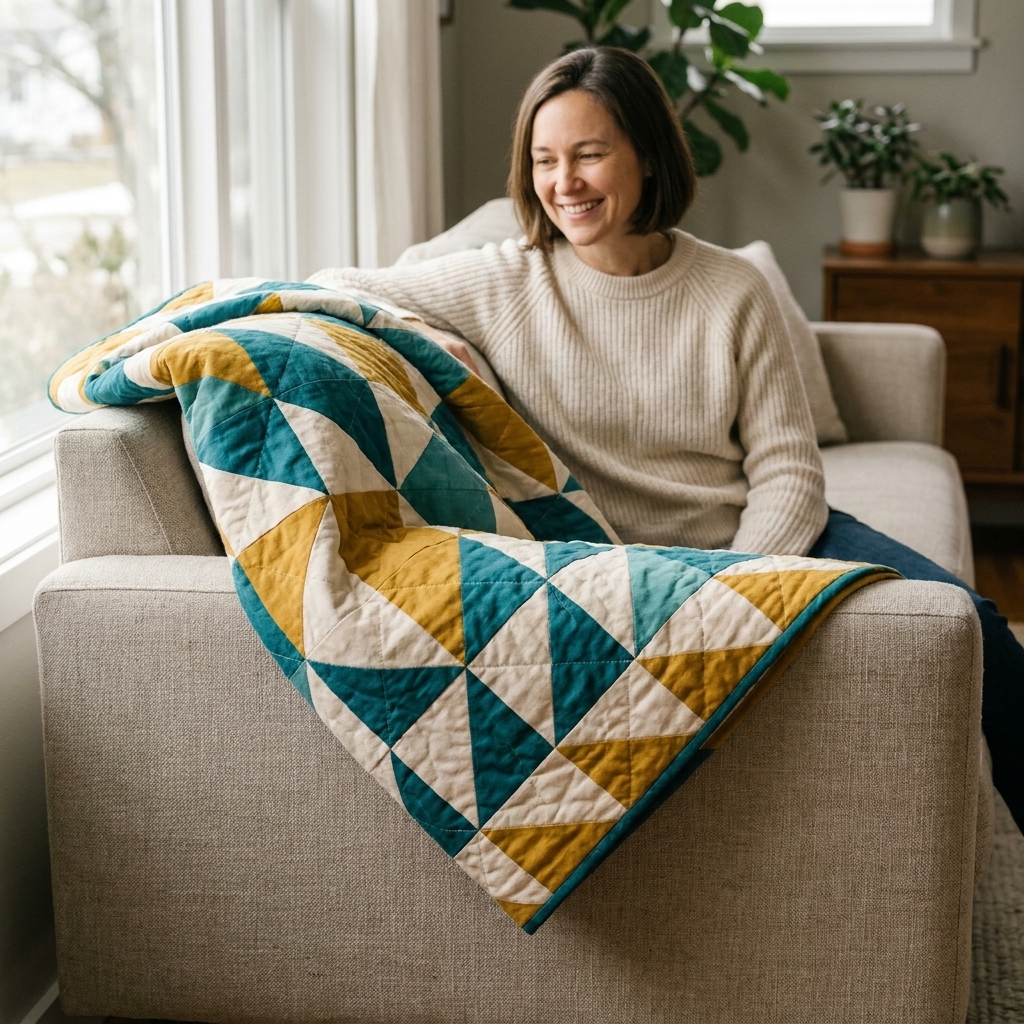
Color planning
Modern baby quilts do not have to be all gray, all the time. The trick is intentional contrast and a palette that feels calm.
Three easy palettes
- Soft neutral + one pop: cream, sand, and a single bold like cobalt or tangerine
- Earthy modern: sage, clay, warm white, and charcoal
- Playful primary remix: red, blue, and golden yellow, softened with lots of white space
The arm’s-length test
After you pick fabrics, stack them and step back. If your eye does not know where to land, you need more contrast. Add a darker fabric, a lighter background, or a quieter blender to give everything room to breathe.
Construction tips
Baby quilts are small, but they deserve the same thoughtful finishing as a bed quilt. These are the little habits that keep the project smooth.
Cutting and piecing
- Use a consistent seam allowance: A true scant 1/4 inch makes blocks behave. If you are not sure, sew two test squares and measure.
- Press with purpose: Press seams to one side for simple patchwork, or press open for flatter intersections in modern designs.
- Square up as you go: Trimming blocks is not failure. It is accuracy insurance.
Basting and quilting
- Spray baste for speed: Especially helpful on a baby quilt you want to finish quickly.
- Keep quilting density durable: Many battings recommend quilting every 4 to 8 inches, depending on the product. Denser quilting holds up to washing and toddler tugging.
- Straight-line quilting looks modern: Use a walking foot, pick a spacing (like 1 or 2 inches), and let the texture build.
Binding that lasts
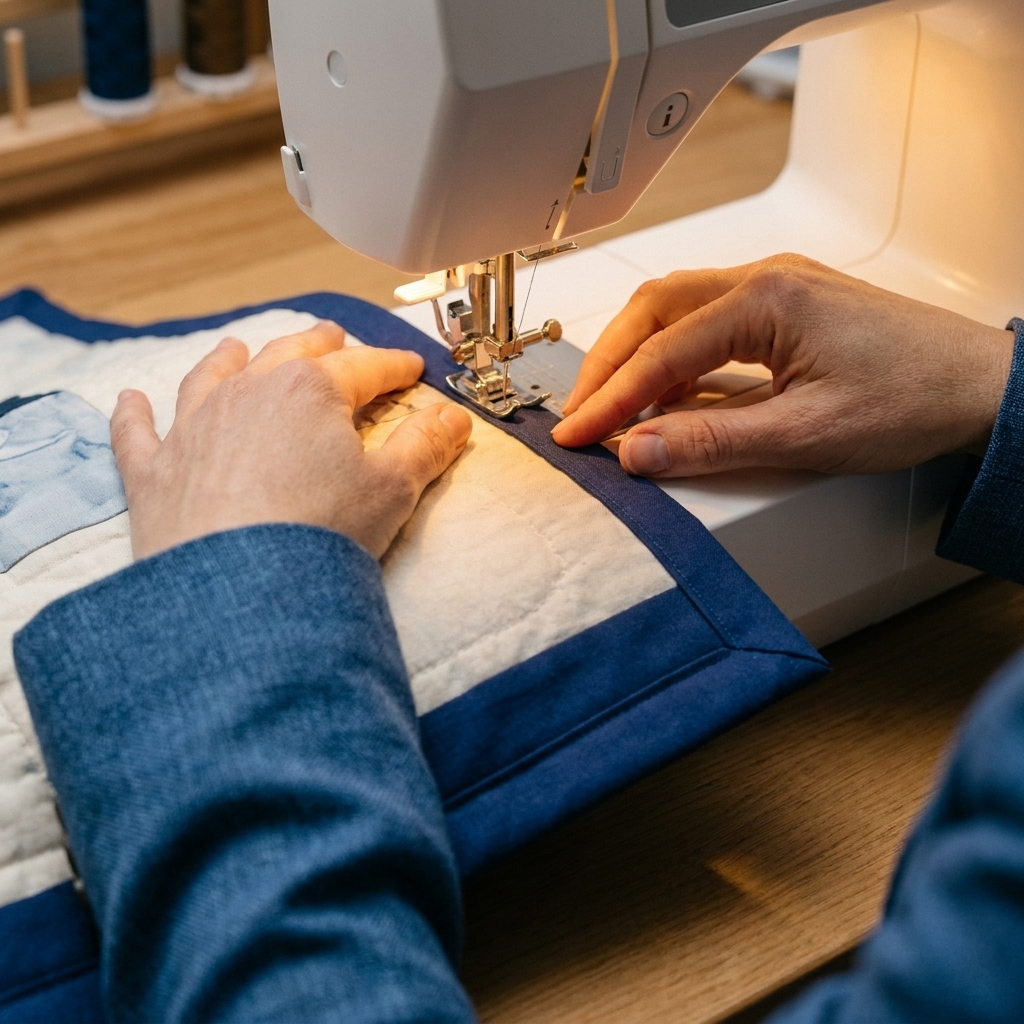
For baby quilts, I strongly prefer double-fold binding (also called French-fold). It stands up to repeated washing and all the edge chewing and dragging a beloved quilt can endure.
Simple fabric math
If you want to sketch a modern baby quilt from scratch, here is the low-stress way I do it.
Step 1: Pick a finished size
Start with 36 x 48 inches if you are unsure. It is a sweet spot for usefulness and quick completion.
Step 2: Choose a unit size
Pick a simple unit that repeats, like a 6-inch finished square or a 3 x 9 inch finished rectangle. Big units equal big modern impact.
Step 3: Build a grid that fits
Example: for a 36 x 48 inch quilt using 6-inch finished squares:
- Across: 36 / 6 = 6 squares
- Down: 48 / 6 = 8 squares
- Total: 48 squares
From there, decide how many are background and how many are accent. A modern look often lands around 60 to 80 percent background, but your eye gets the final vote.
Step 4: Add 1/2 inch for cutting
A 6-inch finished square is cut at 6 1/2 inches. That single habit will save you from so much frustration.
FAQ
How many fat quarters do I need?
It depends on the pattern and how much background you use, but for many modern baby quilts, 6 to 10 fat quarters plus 1 1/2 to 2 1/2 yards of background is a comfortable range. If you want a very scrappy look, you can use more fat quarters and less background.
Is minky ok for backing?
Yes, with two caveats: it is stretchy and it sheds when cut. Use lots of pins or spray baste, reduce presser foot pressure if your machine allows, and consider a walking foot. If you want an easier first baby quilt, start with quilting cotton backing, then graduate to minky later.
What quilting pattern works best?
Straight-line quilting is both beginner-friendly and very modern. Try vertical lines, a simple crosshatch, or gentle organic wavy lines. If your quilt top is busy, quilt simple. If your quilt top has lots of negative space, quilting texture becomes part of the design.
How do I make sure it is washable?
Use quality cotton thread, quilt with enough density to secure the layers, and reinforce the binding well at the start and end. Wash on cool or warm with a gentle detergent, then tumble dry low or line dry. The quilt will soften with every wash, which is exactly what you want for a baby.
A sweet final thought
If your points do not line up perfectly or your stripes wobble a little, you are doing it right. Babies do not need perfection. They need warmth, softness, and something made with steady hands and a full heart. Choose a size that fits the family’s life, pick fabrics that make you smile, and let the quilt become what it is meant to be: loved.