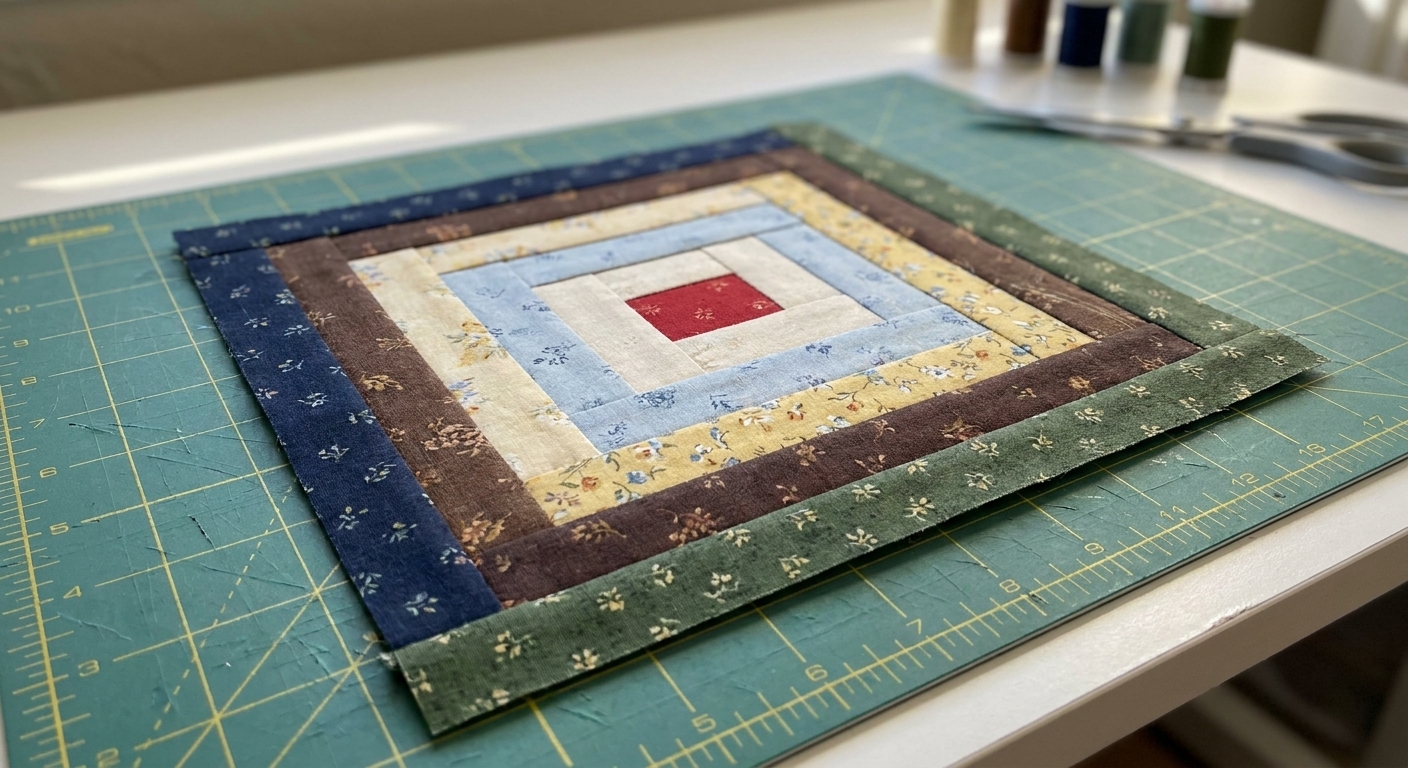
A quilter-friendly breakdown of log cabin blocks, from traditional to Courthouse Steps and Half Log Cabin, plus layout ideas that unlock bold secondary designs.
The Quilt Mark
October 22, 2026
10 Fast Jelly Roll Quilt Patterns for a Weekend
Need a quick finish? These 10 beginner-friendly jelly roll quilt layouts use 2.5-inch precut strips for fast cutting, easy piecing, and satisfying weekend results.

Clara Jenkins
Clara Jenkins is an avid quilter and fabric enthusiast who has been designing and piecing together quilts for over twenty years. She shares her passion for color coordination, block design, and practical sewing techniques to help makers of all skill levels create beautiful, lasting heirlooms. Through Quiltmark, Clara aims to make the timeless art of quilting accessible, joyful, and deeply rewarding for everyone.
Updated October 22, 2026
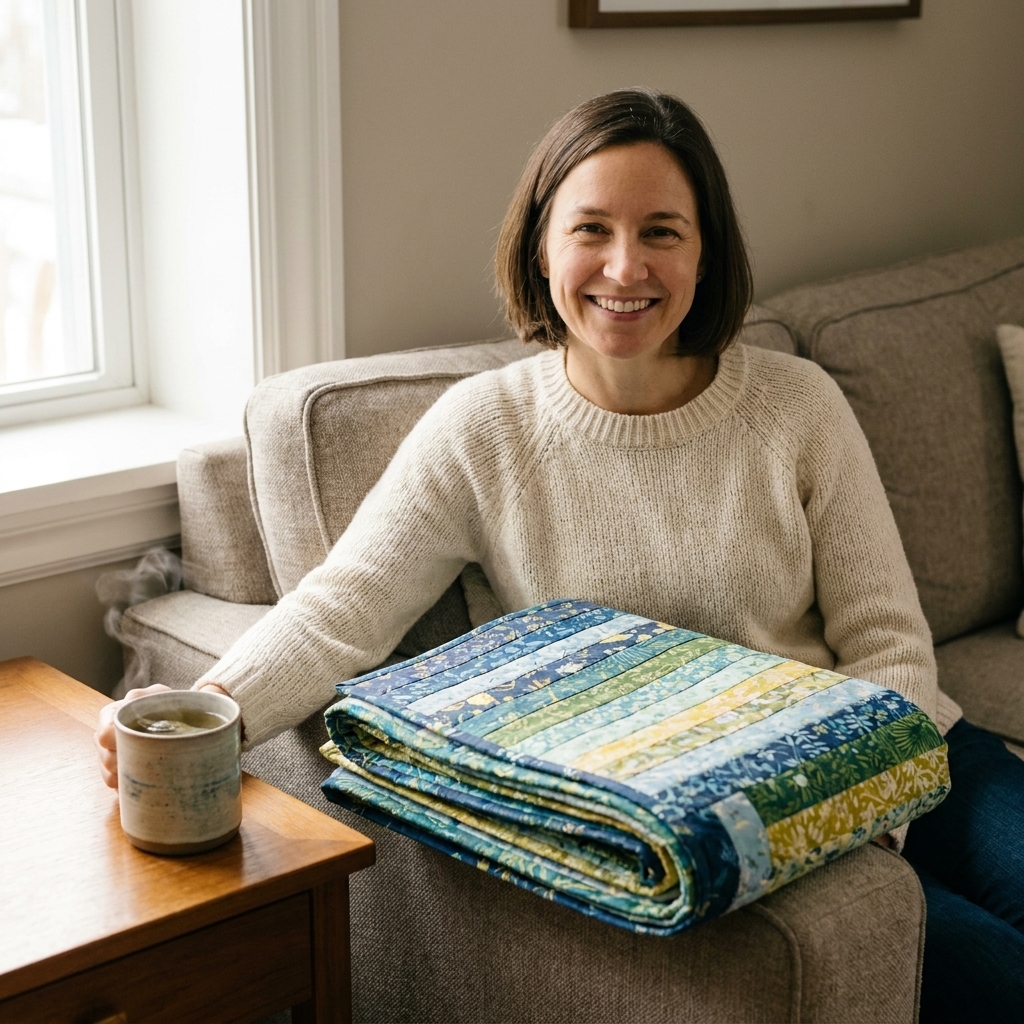
There is something deeply satisfying about starting a quilt on Saturday morning and having a finished top (or very close to it) by Sunday night. Jelly rolls make that kind of momentum possible. Those neat little bundles of 2.5-inch precut strips (typically cut 2.5 inches by width of fabric) remove a huge chunk of prep time, so you can jump straight into the soothing part: sewing long, tidy seams and watching a design appear like magic.
Below are ten of my favorite fast, beginner-friendly jelly roll quilt patterns, more accurately, classic jelly roll quilt layouts you will find in many free and paid patterns. Each one is built around simple strip sewing and straightforward blocks, with plenty of room to make it your own.
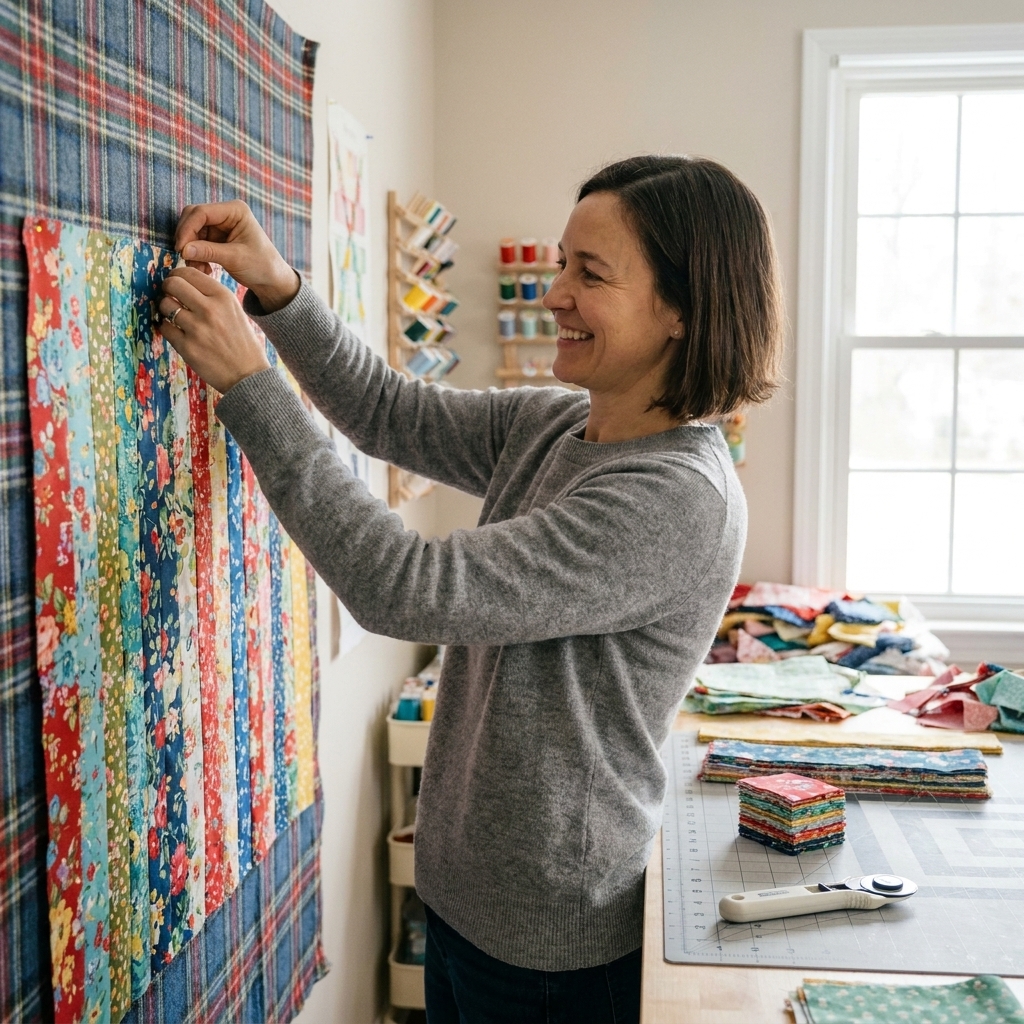
Before you start: quick jelly roll tips
Jelly rolls are speedy, but a few tiny habits make them even more pleasant to sew.
- Know what is in the roll. Many jelly rolls include 40 strips, but counts vary by manufacturer. Peek at the label so you know what you are working with.
- Check strip width. Some precuts are a whisper shy of 2.5 inches. If your pattern is fussy, measure a few strips first and adjust seam allowance as needed.
- Use a consistent scant 1/4 inch seam. It matters most when you are sewing lots of units that need to nest.
- Press with intention. Press seams (lift and set the iron) instead of sliding it back and forth, which can stretch strip sets. For strip sets, I press seams to one side (often toward the darker strip). For blocks that need nesting, alternate directions.
- Starch if your strips feel wiggly. Even when strips are cut on straight grain, they can still stretch from handling, pressing, and lots of seamwork. A light starch helps keep piecing crisp.
- Plan for squaring up. Many weekend quilts include a quick trim step. Keep your square ruler handy.
- Trim and mind the ends. If you are sewing strips end to end (like a Race quilt), trim off selvages and square the ends so seams stay flat and do not fight you later.
1) Rail Fence Remix
Why it is fast: You sew strip sets, slice, and rearrange. The block builds itself.
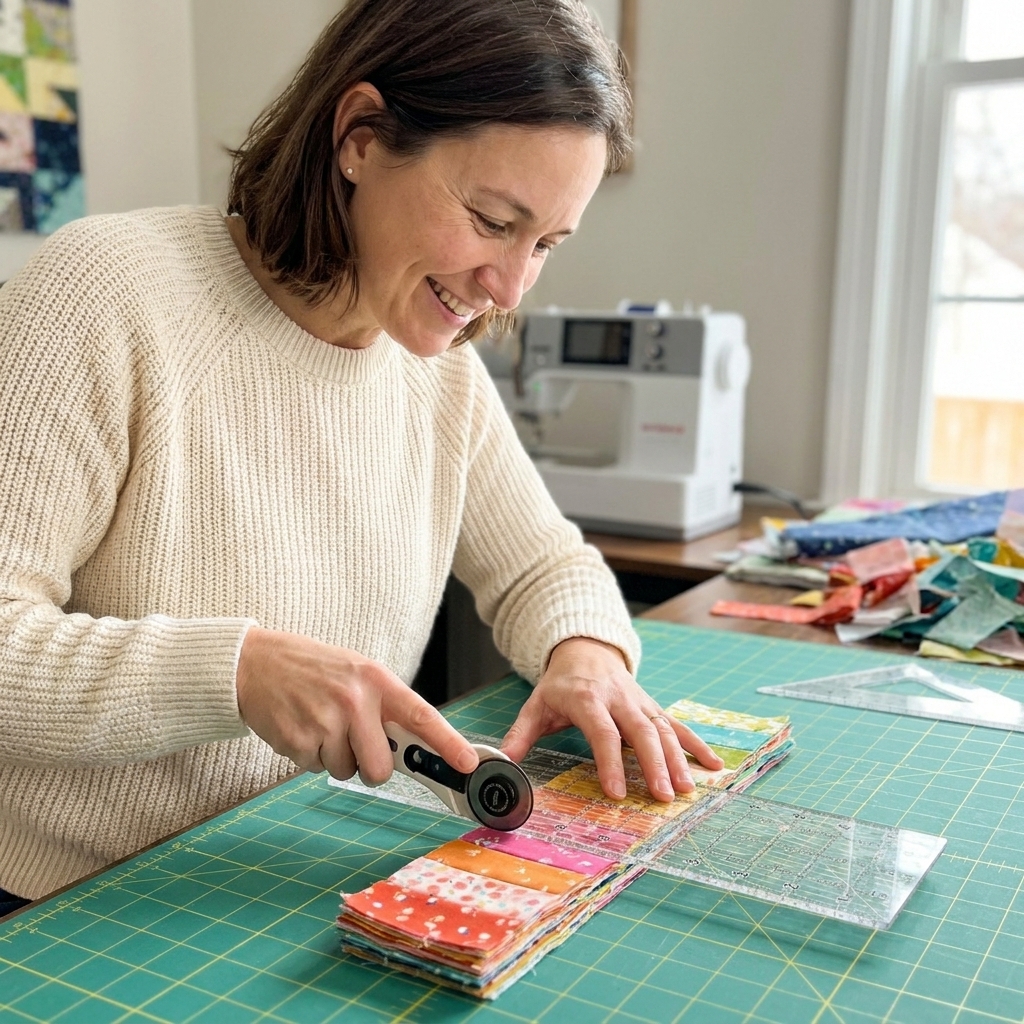
How it works: Join 2 to 4 jelly roll strips into a long strip set, press, then subcut into equal segments. Flip alternating segments to create that classic rail fence movement.
- Best for: Beginners who want a traditional look with modern color options.
- Materials in plain language: Works well with most or all of a 40-strip roll. You can go all-print, or add 1 to 3 yards of a background fabric for breathing room and borders, depending on size.
- Weekend tip: Make two or three different strip-set color recipes so the quilt looks intentional, not random.
2) Jelly Roll Race Quilt
Why it is fast: Minimal cutting and maximum chain piecing. This is the quilt I recommend when someone says, “I just need a win.”
How it works: Sew your strips end to end into one long continuous strip, fold it, sew along the length, then split and repeat. You end up with a lively, scrappy top in a hurry.
- Best for: First-time quilters and anyone stash-busting backing or borders.
- Materials in plain language: Typically uses most or all of one roll. Add borders if you want a throw-size finish, and plan on extra yardage if you prefer a less-scrappy look.
- Weekend tip: Decide ahead of time if you want a “controlled” race (sorted by color families) or a truly scrappy shuffle.
3) Nine-Patch Strips
Why it is fast: You get the nine-patch look without cutting and organizing dozens of individual squares.
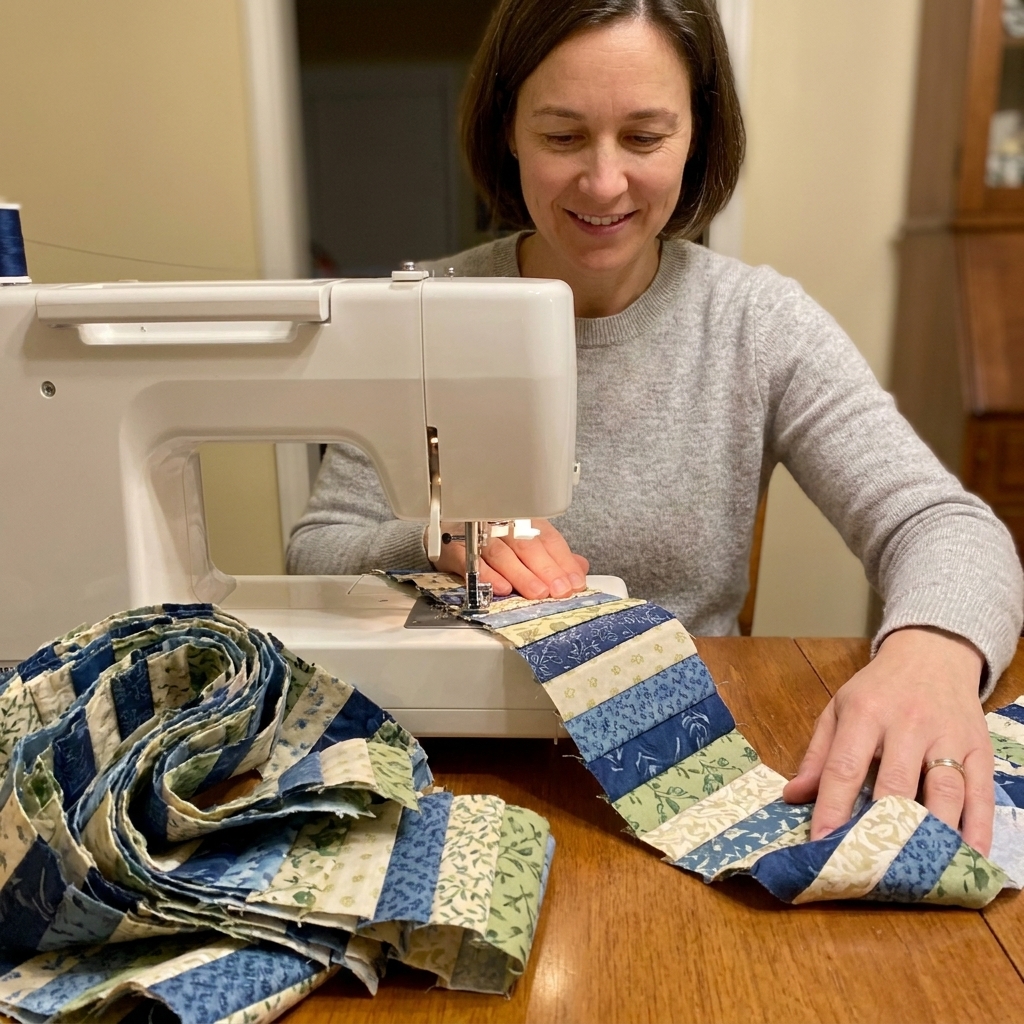
How it works: Sew three-strip sets, cut into segments, then sew segments into nine-patch blocks. Set blocks straight or on point depending on your confidence and time.
- Best for: Quilters who love a classic patchwork vibe.
- Materials in plain language: You can make a generous lap or throw with one roll, plus optional sashing and cornerstones (often 1 to 3 yards total, depending on how much negative space you like).
- Weekend tip: Add a solid sashing strip between blocks if your jelly roll is very busy. It gives the eye a place to rest.
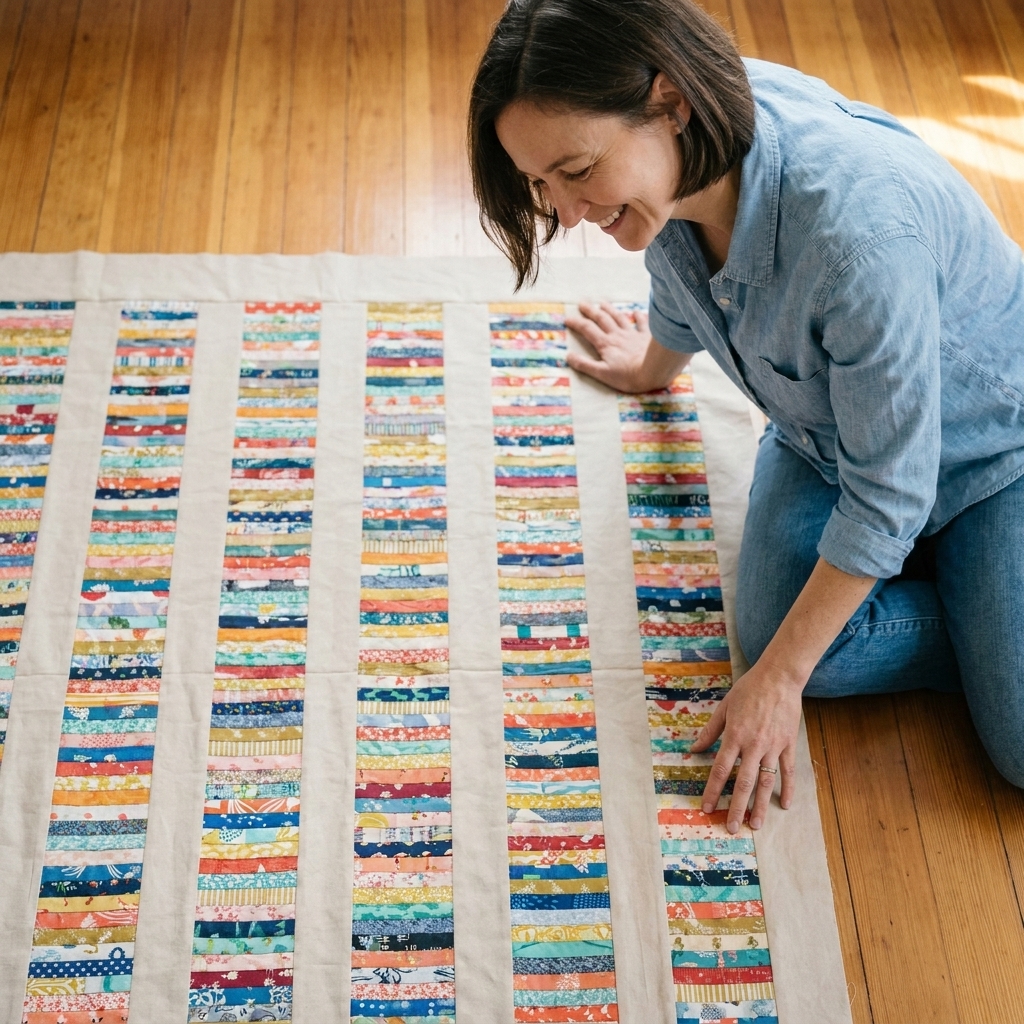
4) Stacked Coins
Why it is fast: The blocks are simply short rectangles stacked into columns. No matching points, just clean seams.
How it works: Cut strips into coin-length pieces (often 2.5 x 5 inches) and sew them into vertical stacks. Alternate stacks with background strips for a tidy, modern layout.
- Best for: Modern quilts, baby quilts, and charity quilts.
- Materials in plain language: Usually uses one roll plus background yardage for the in-between columns (often 1.5 to 3 yards depending on quilt size and spacing).
- Weekend tip: Keep a “neutral” background strip roll nearby. White, cream, or soft gray makes the coins glow.
5) Strip and Flip
Why it is fast: Long seams and a repeating unit that becomes second nature after the first few.
How it works: Sew strips into pairs, subcut, then flip segments to create V-shapes or a gentle zigzag. The layout gives you a bold graphic result with very little fuss.
- Best for: Quilters who want movement without intricate piecing.
- Materials in plain language: Can be made with one roll for a baby to lap size. For a larger throw, plan on extra strips or a second roll, or add a wide background strip between columns.
- Weekend tip: If your points feel intimidating, relax. A soft, “wonky” chevron can be charming, especially with scrappy prints.
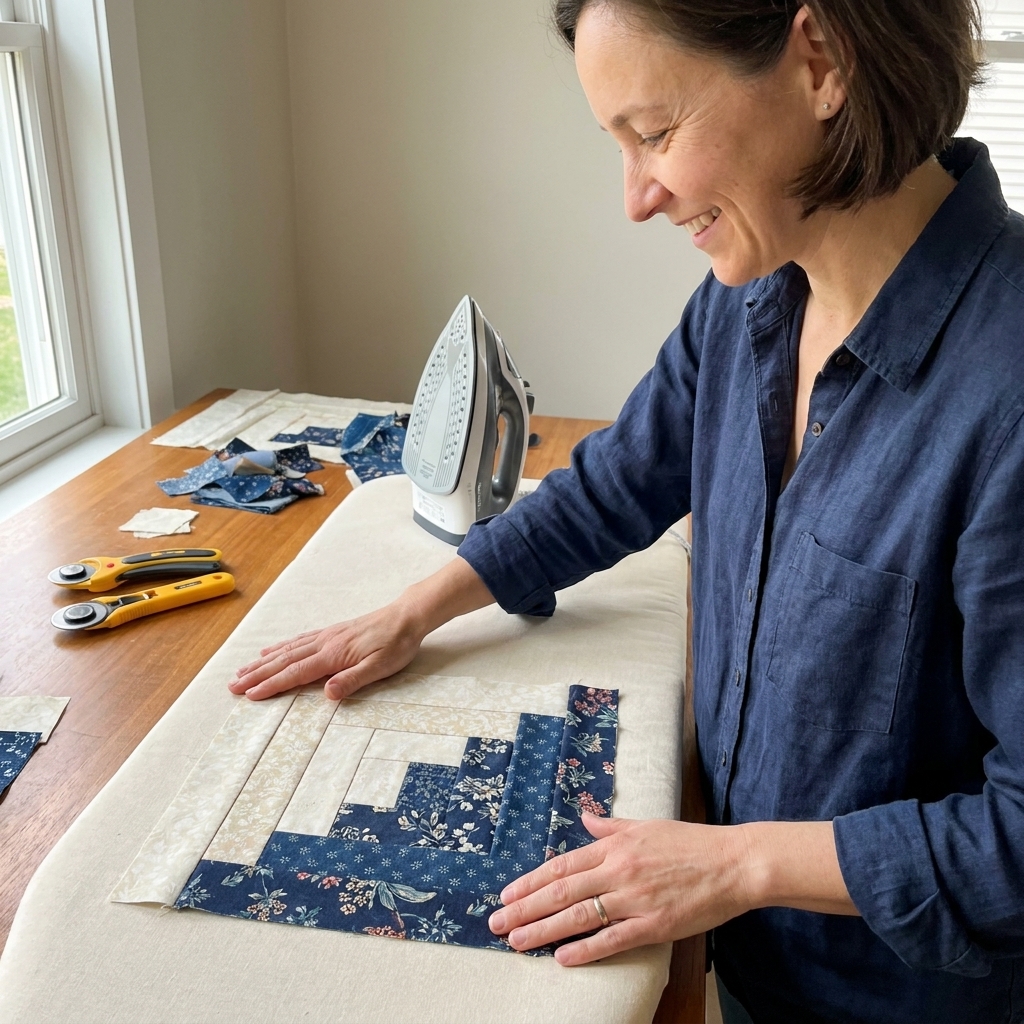
6) Log Cabin Strips
Why it is fast: Jelly roll strips are already the perfect width for log cabin “logs.” Once you start, it is wonderfully rhythmic.
How it works: Use a square center (from yardage or a charm pack), then add strips around it, trimming as you go. Arrange blocks light and dark for sparkle, barn-raising, or courthouse steps effects.
- Best for: Quilters who love traditional blocks but want faster cutting.
- Materials in plain language: Often uses one roll plus centers and/or background fabric (commonly 1 to 3 yards, depending on whether your centers are scrappy or uniform).
- Weekend tip: Sort strips into light and dark piles before you sew. This one step makes the final layout look intentional.
7) Strip Tube Blocks
Why it is fast: You get a triangle-like design while sewing mostly straight seams.
How it works: Sew two strips together, offset slightly, then cut the tube into angled units and open them into dynamic blocks. The result can look like flying geese or pinwheels depending on layout.
- Best for: Confident beginners ready for a little spice.
- Materials in plain language: Great with one roll. Many versions also use a solid or background strip paired with prints to keep the shapes crisp, so plan on extra yardage if you want high contrast.
- Weekend tip: Make a few test units first. Once your cut angle and offset make sense, the rest flies.
8) Ladder Rungs
Why it is fast: Big pieces, straight seams, and easy assembly. It is also forgiving if your seam allowance is not perfectly consistent.
How it works: Sew jelly roll strips into grouped panels, then separate them with wider background “ladder” strips and horizontal crossbars. It reads crisp and modern, even with wild prints.
- Best for: High-contrast quilts and bold prints.
- Materials in plain language: You will likely use one roll plus background fabric (often 2 to 4 yards, because the ladder effect depends on those wider strips).
- Weekend tip: Use a solid or near-solid for the ladder fabric so the jelly roll strips stay the star.
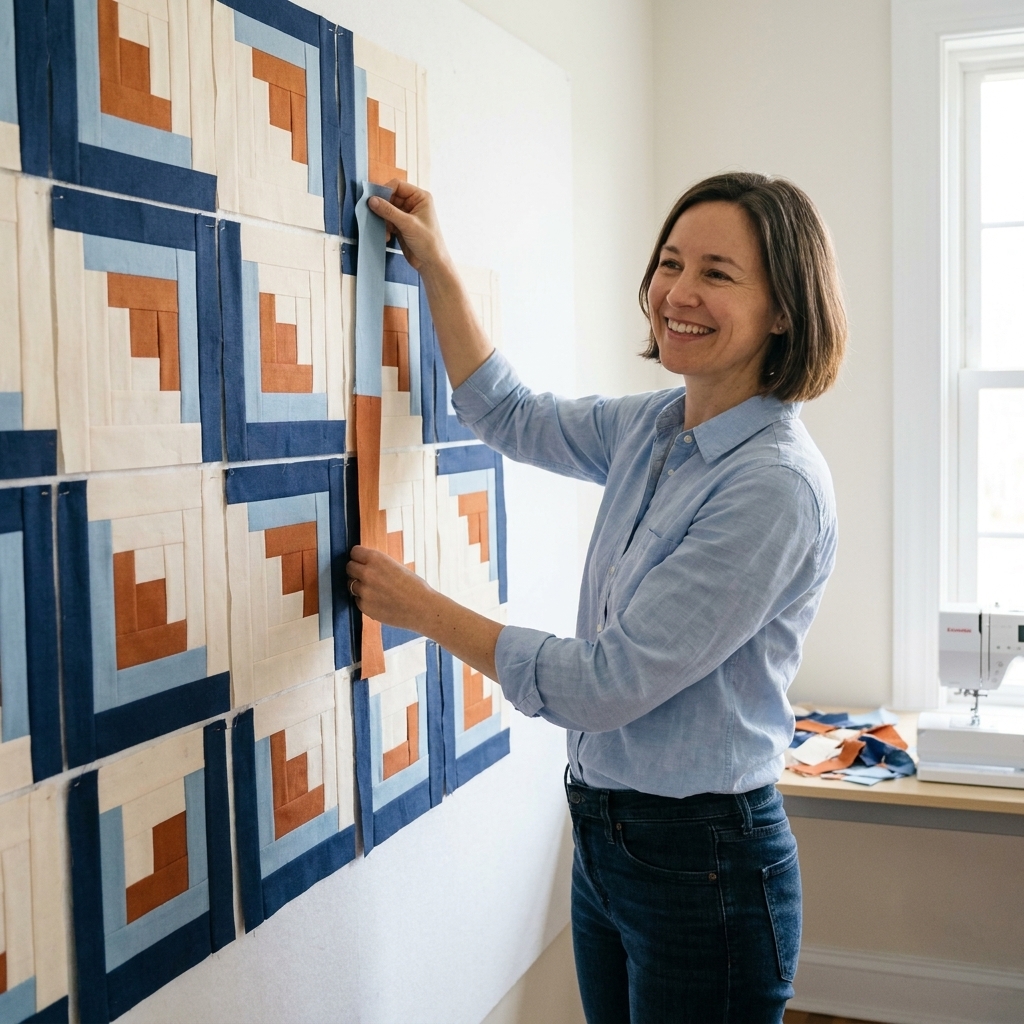
9) Courthouse Steps Squares
Why it is fast: It is strip piecing in a very organized way, and trimming is simple.
How it works: Like log cabin, but you add strips in pairs on opposite sides, creating a framed, architectural look. With jelly rolls, the widths stay consistent and the blocks stack up quickly.
- Best for: Quilters who want a calm, structured design.
- Materials in plain language: Usually one roll plus centers and/or background. Repeating a couple of solids can make it feel polished without slowing you down.
- Weekend tip: Pick two “anchor” colors to repeat in every block. It ties the whole quilt together even if the rest is scrappy.
10) Strippy Stars
Why it is fast: You can create star points with strip piecing and strategic cutting rather than lots of individual triangles.
How it works: Make strip sets that produce repeated point units, then combine with background squares and a center square. The layout gives you stars without the slow, fussy feel.
- Best for: Quilters who want a “wow” block that still finishes quickly.
- Materials in plain language: Stars almost always benefit from a calm background, so plan on background yardage in addition to your roll. One roll can go a long way, but the exact number of stars depends on your block size.
- Weekend tip: Choose a quiet background. Stars pop more when the negative space is calm.
Weekend game plan
If you want a true weekend project, a little pacing helps. Here is the schedule I use when life is busy but my hands need sewing time.
Saturday
- Morning: Choose your layout, sort strips by color value (light, medium, dark), and sew strip sets.
- Afternoon: Subcut and chain piece blocks.
- Evening: Press, trim, and lay out your blocks on the floor or design wall.
Sunday
- Morning: Assemble rows and join the top.
- Afternoon: Add borders (optional), square up, and prep backing.
- Evening: Baste if you are quilting right away, or fold it up with a little note to your future self about where you stopped.
FAQ: Jelly roll quilts
How many jelly rolls do I need?
Many throw-size jelly roll quilts use one jelly roll plus background fabric, borders, or sashing. Bigger quilts and layouts with lots of negative space often want two rolls, or one roll plus extra yardage in a coordinating solid. If your roll has 40 strips, it is a nice rule of thumb to assume you can build a satisfying top from that, then adjust with borders or background to hit your target size.
Do I have to pre-wash jelly roll strips?
I usually do not pre-wash precuts because they can fray and tangle. If you are worried about bleeding, test one strip in warm water, or plan to use a color catcher when you wash the finished quilt.
Why are my strips stretching and waving?
Strips can stretch from handling and pressing, especially once they are sewn into long strip sets. Use a light starch if needed, handle gently, and press (lift and set) rather than ironing back and forth. Also, let strip sets cool flat after pressing before you cut them.
What is the fastest quilting option for a weekend finish?
Big, forgiving designs win: straight-line quilting with a walking foot, a simple wavy stitch, or quilting 1/4 inch to the side of major seams for easy tracking. Stitch in the ditch can look beautiful, but it can be trickier than it sounds when you are new. Save dense custom quilting for a quilt you want to linger over.
Pick one and start sewing
If you are feeling stuck, choose the layout that matches your energy level. Want mindless, relaxing seams? Go Jelly Roll Race. Want something structured and classic? Rail Fence or Nine-Patch Strips will make you very happy. And if you want a little drama without extra difficulty, Strippy Stars is a weekend-friendly showstopper.
Put the kettle on, clear a small space by the machine, and let those 2.5-inch strips do what they do best: turn a handful of fabric into a quilt top before Monday arrives.