A curated list of quick, beginner-friendly jelly roll quilt layouts that turn 2.5-inch precut strips into beautiful tops fast, with simple tips for clean pie...
The Quilt Mark
October 22, 2026
Quilting Precuts Explained
Layer cakes, charm packs, jelly rolls, and fat quarters can feel like a foreign language. Here’s a clear breakdown of standard precut sizes, what they equal in yardage, and how to buy just enough fabric for your quilt.

Clara Jenkins
Clara Jenkins is an avid quilter and fabric enthusiast who has been designing and piecing together quilts for over twenty years. She shares her passion for color coordination, block design, and practical sewing techniques to help makers of all skill levels create beautiful, lasting heirlooms. Through Quiltmark, Clara aims to make the timeless art of quilting accessible, joyful, and deeply rewarding for everyone.
Updated October 22, 2026
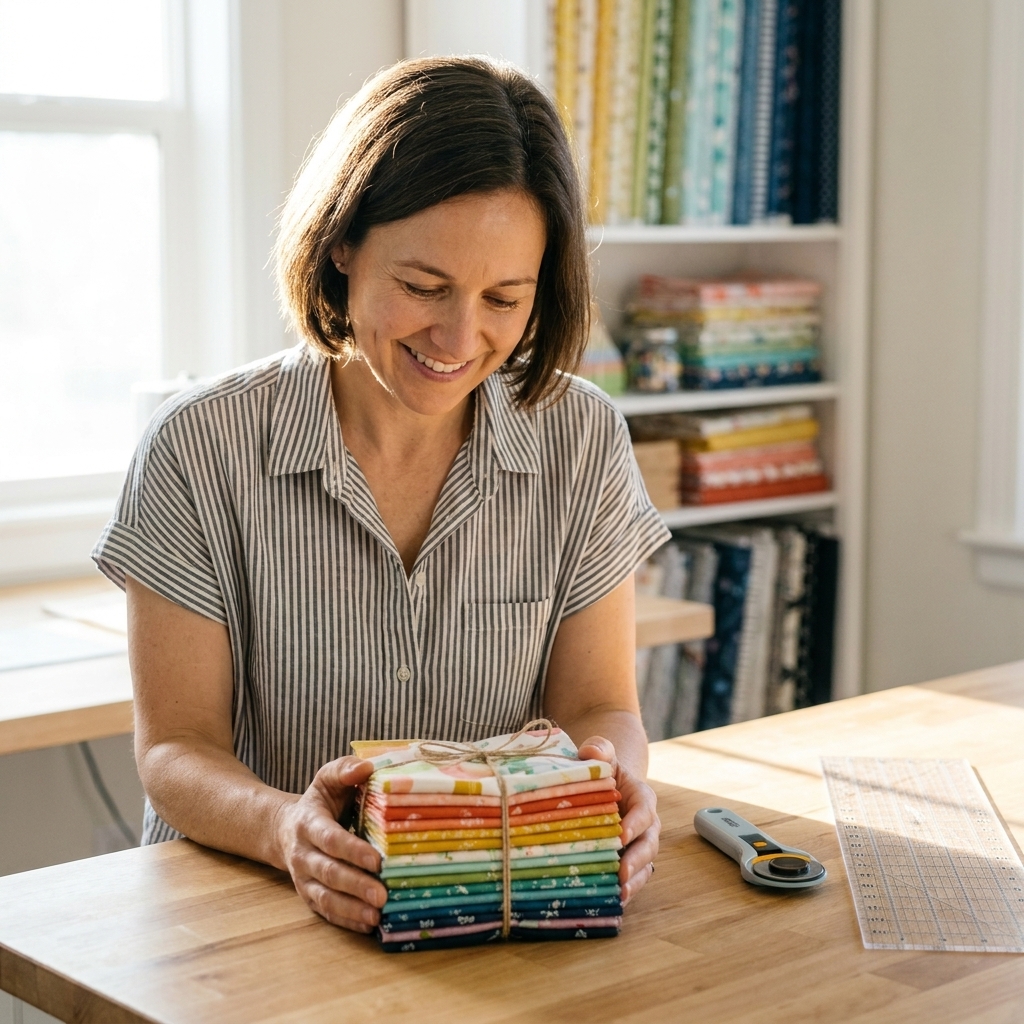
I still remember the first time I stood in front of a precut wall, feeling like I’d wandered into a candy shop where everything looked delicious and I had no idea what anything was called. Layer cakes. Charm packs. Jelly rolls. Honey buns. They sound sweet, but when you are trying to translate them into yardage for a pattern, it can get sticky fast.
This guide will help you shop with confidence. We’ll talk standard precut sizes, realistic yardage equivalents, and the little gotchas that matter in real quilts, like pinked edges, trimming, and why two precuts with the same name can yield slightly different results.
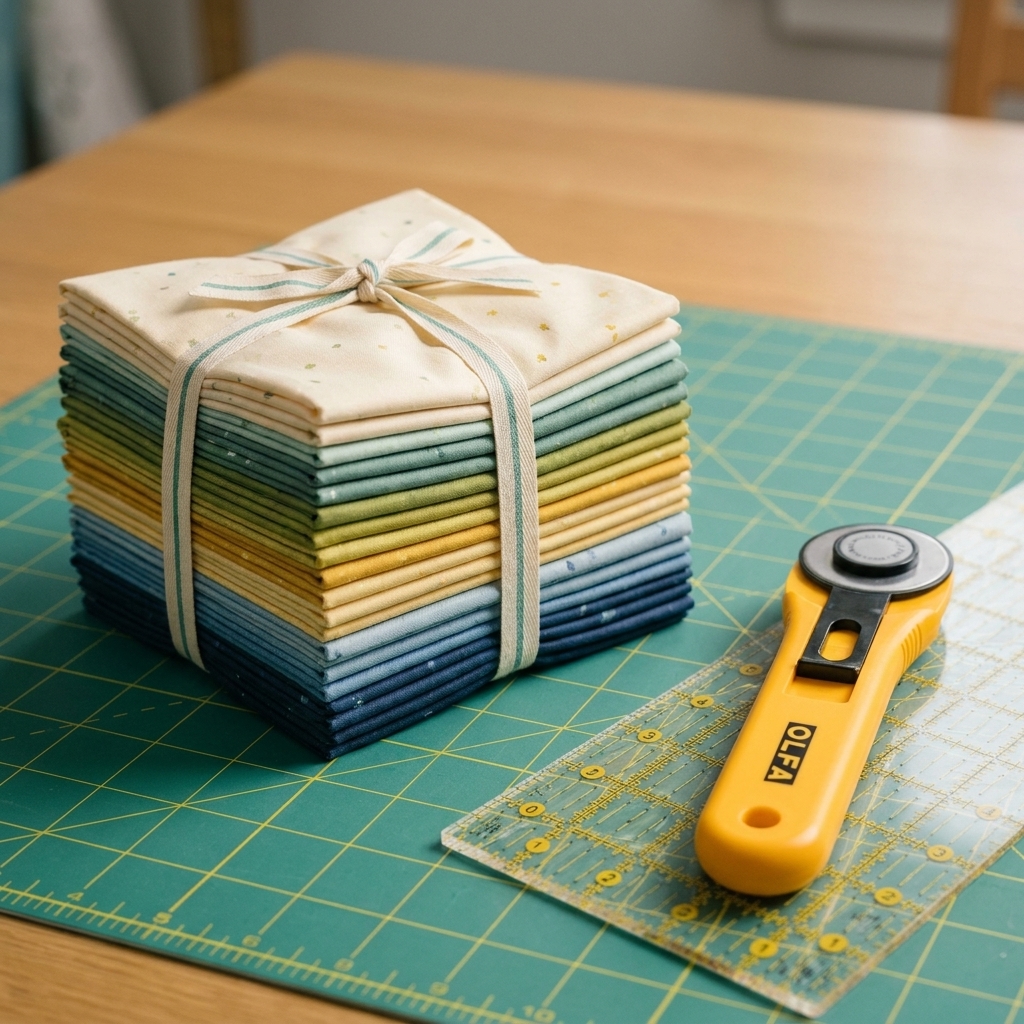
Before the math: what changes the yield?
Precuts are wonderfully convenient, but they do not behave exactly like yardage off the bolt. A few details make a big difference when you are planning a quilt.
- Pinking: Most precuts have zigzag edges. That protects against fraying, but it also means you cannot count on every last thread of the nominal size. A 5-inch charm is usually very close to 5 inches, but the usable square might be a hair under once you true it up.
- Manufacturer variation: Precut sizes are standardized in the industry, but different brands, collections, and even shops can run slightly generous or slightly shy. Counts vary too.
- Trimming: Many patterns assume you will square up pieces. If you need crisp, perfect units, plan for a bit of waste.
- Fabric width: Yardage math assumes usable width of fabric (often called WOF), typically about 40 to 44 inches usable depending on selvages and the manufacturer. Precuts are not tied to WOF, so conversions are always approximate.
- Seam allowance: Most quilting patterns assume a 1/4-inch seam allowance. That does not change the amount of fabric in a precut, but it does change the finished size you get out of each piece.
My rule: treat yardage equivalents as planning estimates, not sacred math. If you are cutting it close, buy a little extra or add a small blender yardage you can use to patch the gaps.
Standard precut sizes at a glance
Here are the most common precuts you will see in quilt shops, along with their standard sizes. Piece dimensions are fairly consistent, but counts can vary by manufacturer and collection, so always check the label.
| Precut name | Typical piece size | Common count | What it’s best for |
|---|---|---|---|
| Layer Cake | 10" x 10" squares | often 40 to 42 | Fast piecing, big blocks, half square triangles |
| Charm Pack | 5" x 5" squares | often 40 to 42 | Patchwork, small blocks, easy scrappy looks |
| Mini Charm Pack | 2.5" x 2.5" squares | often 40 to 42 | Mini quilts, postage stamp piecing, accents |
| Jelly Roll | 2.5" x WOF strips (often ~42") | often 40 | Strip quilts, bindings, sashing, log cabins |
| Honey Bun | 1.5" x WOF strips (often ~42") | often 40 | Thin strip piecing, borders, tiny logs |
| Fat Quarter Bundle | about 18" x 22" | varies | Scrappy quilts, larger cuts, fussy cutting |
| Fat Eighth Bundle | about 9" x 22" | varies | Smaller projects, coordinated variety |
Now let’s translate those into yardage equivalents you can actually use when a pattern calls for “2 yards of assorted prints” and you want to shop the precut wall instead.
Yardage equivalents: practical conversions
Quilters love a tidy conversion, but the truth is that “equivalent yardage” depends on how the fabric is cut and what shapes you need. The numbers below are solid, widely used estimates for planning.
Note: I’ll show the common 40 to 42-piece formats because those are what you’ll see most. If your pack has a different count, the math still works. Just swap in your number of pieces.
Layer cakes (10" squares)
Standard: often 40 to 42 squares, each 10" x 10".
Planning equivalent: about 2.6 to 3 yards of fabric total, depending on count and usable WOF.
Why it varies: Layer cakes are cut as squares, not as continuous yardage, so you lose flexibility. If your pattern needs long strips or large background panels, the yardage number is not the whole story.
- Quick math (42-piece pack): 42 squares x 100 sq in = 4200 sq in. One yard of 42" usable WOF fabric is about 42" x 36" = 1512 sq in. 4200 / 1512 ≈ 2.78 yards.
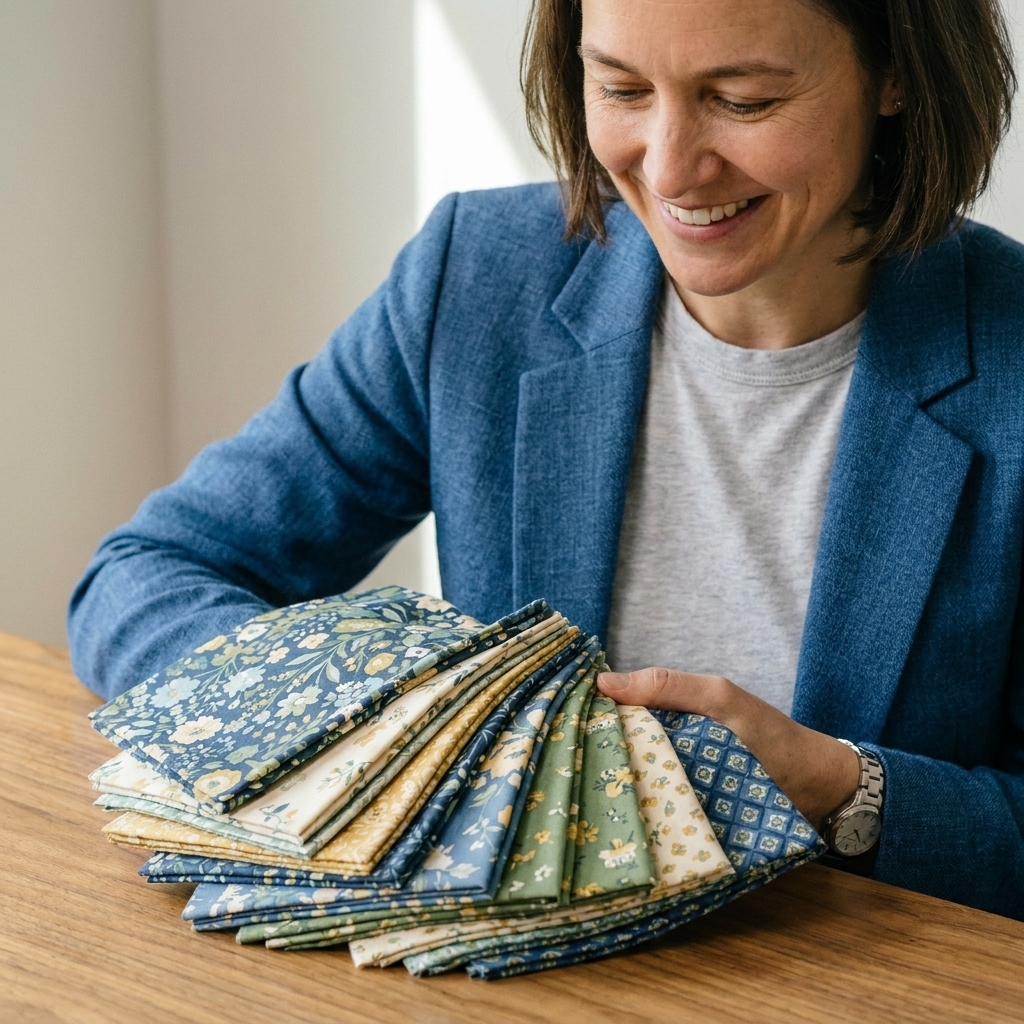
Charm packs (5" squares)
Standard: often 40 to 42 squares, each 5" x 5".
Planning equivalent: about 0.65 to 0.75 yard of fabric total, depending on count and usable WOF.
Charm packs are perfect for patchwork and for getting a whole-collection look without committing to yardage. They are less ideal for patterns that need long, unbroken strips.
- Quick math (42-piece pack): 42 x 25 sq in = 1050 sq in. 1050 / 1512 ≈ 0.69 yard.
Mini charm packs (2.5" squares)
Standard: often 40 to 42 squares, each 2.5" x 2.5".
Planning equivalent: about 0.16 to 0.18 yard total, depending on count and usable WOF.
Mini charms are more about variety than volume. I love them for accents, tiny patchwork panels, and zipper pouches where you want lots of prints without buying a pile of fat quarters.
- Quick math (42-piece pack): 42 x 6.25 sq in = 262.5 sq in. 262.5 / 1512 ≈ 0.17 yard.
Jelly rolls (2.5" strips)
Standard: often 40 strips, each 2.5" x WOF (often around 42", sometimes a bit more or less).
Planning equivalent: about 2.6 to 2.9 yards total, depending on strip count and length.
If you have ever tried to cut forty accurate 2.5-inch strips from yardage, you understand why jelly rolls feel like magic. They are also wonderfully consistent for strip sets, log cabins, rail fences, and bindings.
- Quick math (40 strips at ~42"): 40 strips x (2.5" x 42") = 4200 sq in total, the same square inches as a 42-piece layer cake.
- Reality check: Strips are long and narrow, so they behave differently than squares in a pattern. A jelly roll can be the right amount of fabric but the wrong shape if your pattern needs big chunks.
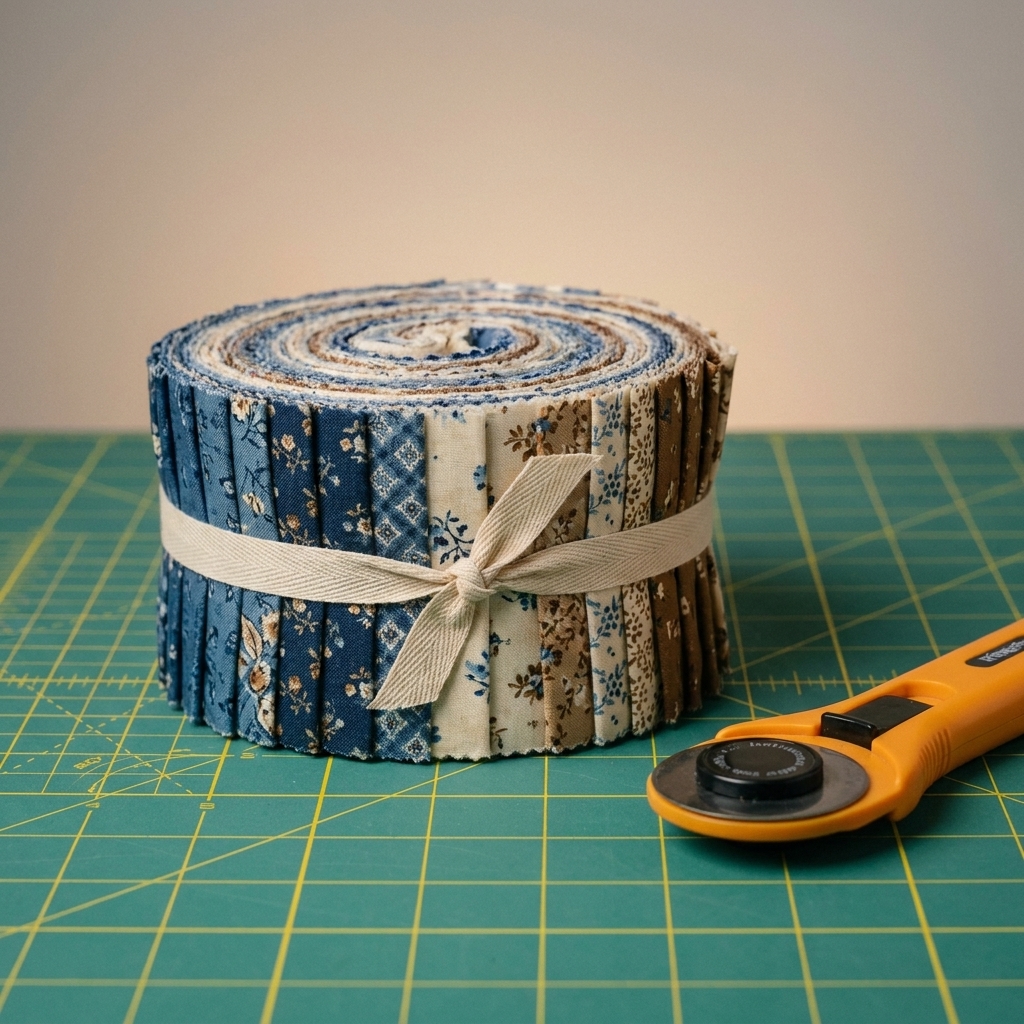
Honey buns (1.5" strips)
Standard: often 40 strips, each 1.5" x WOF (often around 42").
Planning equivalent: about 1.6 to 1.8 yards total, depending on strip count and length.
Honey buns are fantastic when you want fine strip piecing without cutting it all yourself. Just remember that many quilt patterns are written for 2.5-inch strips, so you may need to adjust block math or pick patterns drafted for 1.5-inch strips.
Fat quarters
Standard: about 18" x 22" (sometimes closer to 18" x 21" depending on how the shop squares the cut).
Planning equivalent: one fat quarter equals 1/4 yard in area, but not in shape.
This is the one that trips people up. A quarter yard off the bolt is about 9" x 40" to 44" usable WOF. A fat quarter is half a yard cut and then halved again, giving you a shorter, wider piece. Same area, very different cutting possibilities.
- Best use: fat quarters are ideal for cutting larger pieces than a skinny quarter yard allows, like 10" squares, bigger triangles, or fussy-cut motifs.
- Heads-up: if a pattern specifically calls for strips longer than 18", fat quarters may not substitute cleanly.
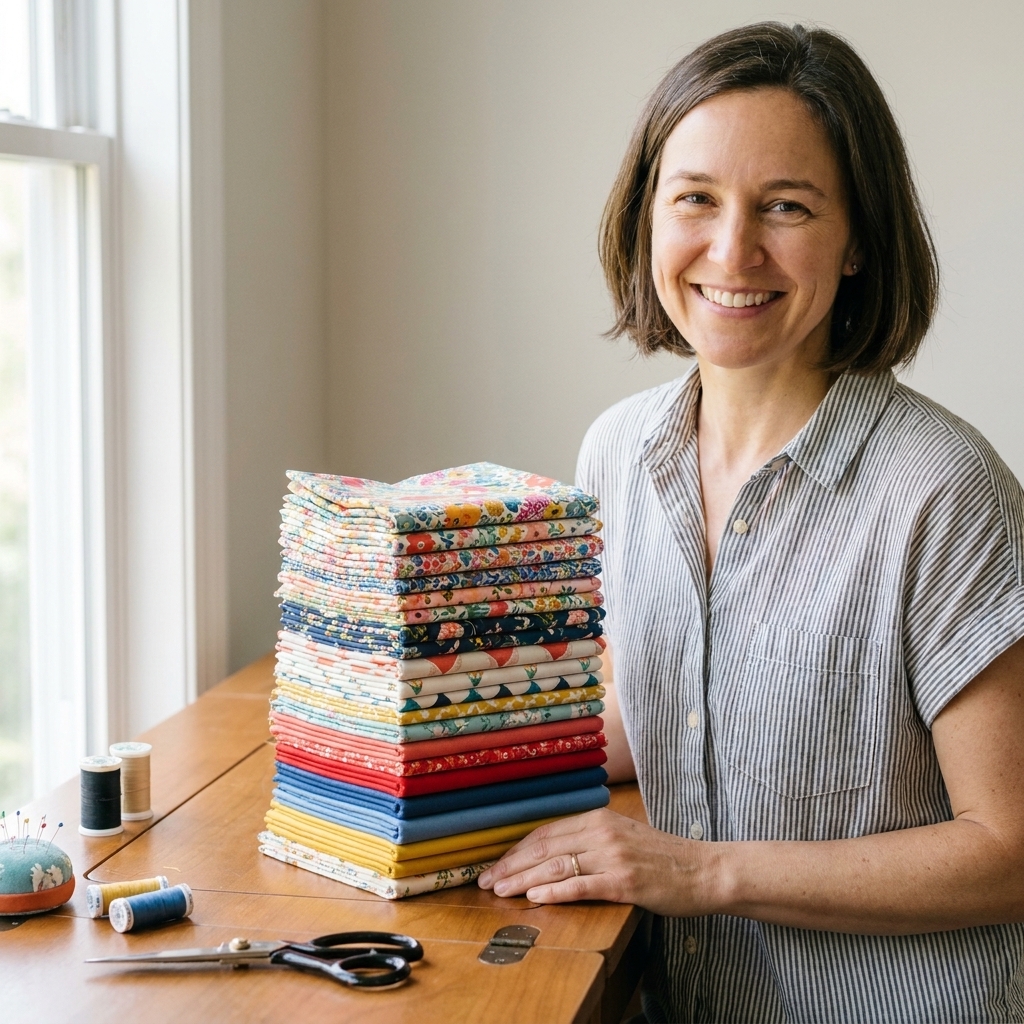
Fat eighths
Standard: about 9" x 22" (may vary slightly).
Planning equivalent: one fat eighth equals 1/8 yard in area.
Fat eighth bundles are a sweet spot for smaller projects and for quilters who want variety without adding a mountain to the stash. You can cut a surprising number of usable pieces from a fat eighth, especially if your blocks finish at 4" or smaller.
How many precuts for common quilt sizes?
Every pattern is its own creature, but these estimates help when you want a ballpark plan, especially for beginner-friendly patchwork quilts where most of the top is made from the precut itself.
Charm pack quilts (5" squares)
- Baby quilt: 1 to 2 charm packs, depending on layout and borders
- Throw quilt: 2 to 4 charm packs
- Twin: 4 to 6 charm packs
If you are sewing simple patchwork, remember seam allowances shrink those 5" squares down to 4.5" units before assembly. Borders and sashing stretch your fabric further and make the quilt feel more finished.
Layer cake quilts (10" squares)
- Baby quilt: 1 layer cake can be plenty with a border
- Throw quilt: 1 to 2 layer cakes
- Twin: 2 layer cakes plus background
Layer cake patterns often pair the squares with a background fabric for contrast. Plan separate yardage for that background unless the pattern is strictly all squares.
Jelly roll quilts (2.5" strips)
- Throw quilt: 1 jelly roll plus background or a coordinating solid
- Twin: 1 to 2 jelly rolls depending on design density
Strip quilts can look dramatically different based on how much negative space you add. A little background fabric can turn one jelly roll into a generous throw.
Substituting precuts and yardage
Sometimes you have a pattern written for yardage but your heart wants a layer cake. Or you have a jelly roll in your stash and the pattern calls for “assorted 2.5" strips from width of fabric.” Here’s how to swap without the headache.
When a pattern calls for assorted prints by the yard
Good swaps:
- For scrappy piecing: charm packs, layer cakes, fat quarter bundles
- For strip piecing: jelly rolls
What to watch: yardage gives you continuous length. Precuts give you convenience. If the pattern needs long borders, long sashing, or large pieces, keep those as yardage and use precuts for the patchwork sections.
Concrete example: A charm pack might equal about 0.7 yard in area, but you cannot cut a single 5" x 60" border strip from it. Area matches, shape does not.
When a pattern calls for fat quarters
Easy swap: A fat quarter is about 1/4 yard in area, but its shape is different than a straight cut. The cleanest substitute is usually yardage when the pattern needs repeated cuts from the same print, and a fat quarter bundle when the pattern simply wants variety.
Fat quarters shine when you need a few medium-sized pieces from many fabrics, like star points, focus blocks, or fussy-cut centers.
When a pattern calls for 2.5" strips from width of fabric
Closest swap: a jelly roll.
But note that jelly roll strips are often cut to around 42", not always the full usable WOF. If your pattern is extremely precise, you might come up one block short. I like to add a solid or a blender strip set as a safety net.
Real-life gotchas
Do not count on the outer strip
In jelly rolls, the outer strip can get handled a lot. If it feels stretched or looks a little distorted, set it aside for a smaller cut, a scrappy binding, or a block where precision is not critical.
Prewashed fabric changes everything
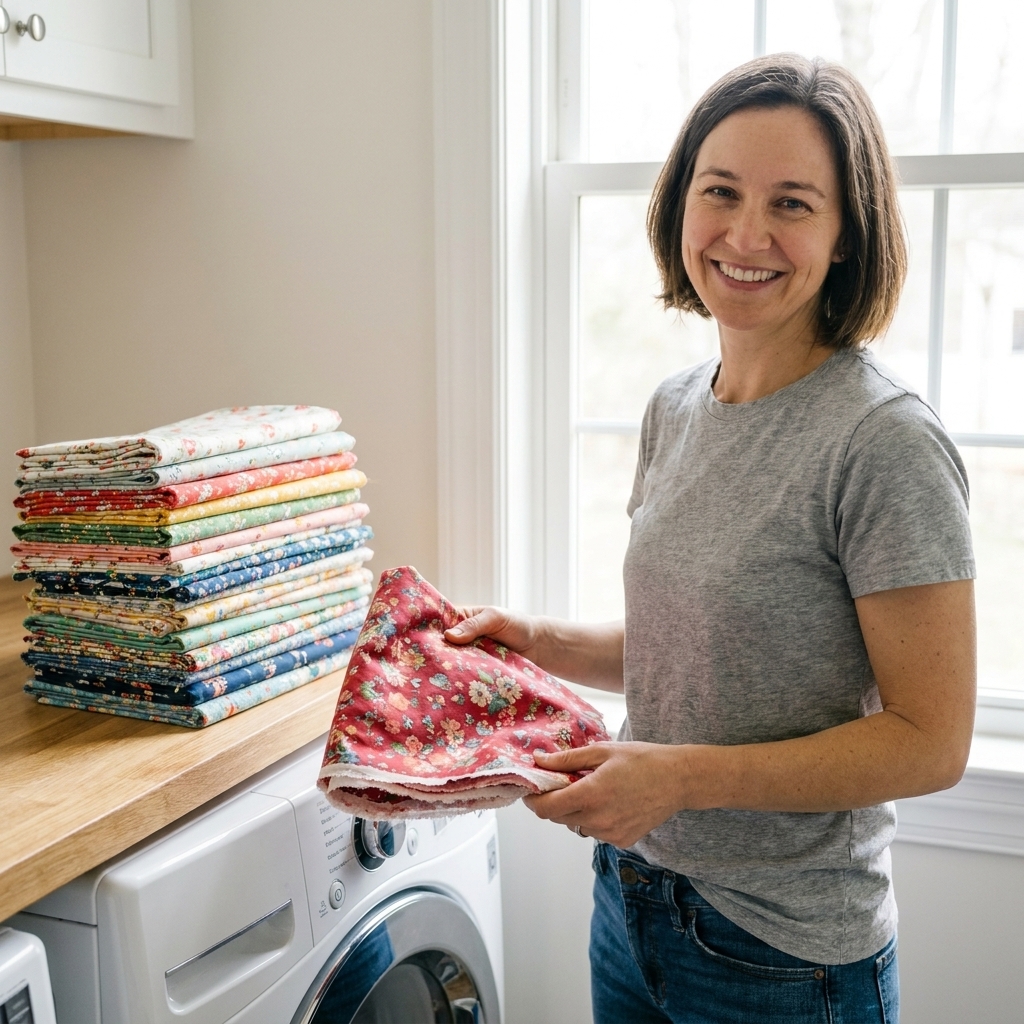
Most precuts are designed to be used unwashed. If you prewash, expect fraying along the pinked edge and some shrink. I am not here to tell you never to prewash, but if you do, plan for extra and be gentle. A mesh bag and a short cycle help.
Duplicates happen
Some collections include duplicates in precuts, especially in prints that coordinate tightly. If your pattern needs a specific number of unique prints, check the contents before you commit.
Background and backing are usually not precut-friendly
Even if you piece your entire quilt top from precuts, your background fabric, borders, binding, and backing are often easier and cheaper as yardage. Think of precuts as your flavor and yardage as your structure.
Quick reference
| Precut | Typical total square inches | Planning yardage equivalent (about 42" usable WOF) |
|---|---|---|
| Layer cake (42 x 10" squares) | 4200 | ~2.8 yards |
| Charm pack (42 x 5" squares) | 1050 | ~0.7 yard |
| Mini charm pack (42 x 2.5" squares) | 262.5 | ~0.17 yard |
| Jelly roll (40 x 2.5" x ~42" strips) | 4200 | ~2.8 yards |
| Honey bun (40 x 1.5" x ~42" strips) | 2520 | ~1.7 yards |
| Fat quarter (18" x 22") | 396 | 0.25 yard (area) |
| Fat eighth (9" x 22") | 198 | 0.125 yard (area) |
Friendly reminder: these are area-based equivalents. The more your pattern depends on piece shape and continuous length, the more you should treat these as guidance, not guarantees.
FAQ
Are all precuts the same size across brands?
They are intended to be standardized, but small variations happen in both dimensions and counts. If you are mixing precuts from different lines, plan to square up to the smallest consistent size and accept a bit of trim waste.
How much fabric is in a stacker or assorted squares pack?
Many stackers are essentially layer cakes, but always check the label for piece size and count. The name can vary by manufacturer even when the size is similar.
Can I use a charm pack to replace a layer cake?
Not directly, because the pieces are different shapes. In the common 42-piece format, one layer cake has about four times the area of one charm pack (10" squares versus 5" squares). If counts differ, that ratio changes. If you are adapting a pattern, you can often make smaller blocks from charms, but it becomes a redesign rather than a straight swap.
Do I need to add extra when buying precuts?
If your pattern uses every piece with no wiggle room, I like to add a little cushion. That might mean grabbing one extra charm pack, or adding a half yard of a coordinating blender for just in case patches, borders, or binding.
A calm way to shop the precut wall
If you take nothing else with you, take this: precuts are a shortcut, not a trap. They are meant to make quilting more joyful. Pick the precut that matches the shapes your pattern needs (squares versus strips versus larger cuts), then use yardage equivalents only as a planning tool.
And if you come home with a jelly roll that was not on your list, well, you are in good company. Put the kettle on, admire your fabric, and let future you be delighted.